Sponsored
Curved Autoplay YouTube Video
  • Global Marine Omega-3 Fatty Acids Market to Hit USD 3.79 Billion by 2032 Amid Growing Demand for Heart and Brain Health Supplements

    Marine Omega-3 Fatty Acids Market continues its upward trajectory, reaching a valuation of USD 2.53 billion in 2023 with projections indicating growth to USD 3.79 billion by 2032, expanding at a 4.6% CAGR. This sustained expansion reflects increasing consumer awareness of cardiovascular and cognitive health benefits, coupled with growing applications across pharmaceuticals, nutraceuticals, and functional foods.

    EPA and DHA omega-3s derived from fish oil, krill oil, and algal sources have become essential ingredients in preventive healthcare formulations. The market's momentum is further amplified by clinical validations of omega-3's anti-inflammatory properties and rising disposable incomes in developing economies enabling premium supplement adoption.

    Download FREE Sample Report: https://www.24chemicalresearch.com/download-sample/282681/global-marine-omega-fatty-acids-market-2025-2032-933

    Get Full Report Here: https://www.24chemicalresearch.com/reports/282681/global-marine-omega-fatty-acids-market-2025-2032-933

    Global Marine Omega-3 Fatty Acids Market to Hit USD 3.79 Billion by 2032 Amid Growing Demand for Heart and Brain Health Supplements Marine Omega-3 Fatty Acids Market continues its upward trajectory, reaching a valuation of USD 2.53 billion in 2023 with projections indicating growth to USD 3.79 billion by 2032, expanding at a 4.6% CAGR. This sustained expansion reflects increasing consumer awareness of cardiovascular and cognitive health benefits, coupled with growing applications across pharmaceuticals, nutraceuticals, and functional foods. EPA and DHA omega-3s derived from fish oil, krill oil, and algal sources have become essential ingredients in preventive healthcare formulations. The market's momentum is further amplified by clinical validations of omega-3's anti-inflammatory properties and rising disposable incomes in developing economies enabling premium supplement adoption. Download FREE Sample Report: https://www.24chemicalresearch.com/download-sample/282681/global-marine-omega-fatty-acids-market-2025-2032-933 Get Full Report Here: https://www.24chemicalresearch.com/reports/282681/global-marine-omega-fatty-acids-market-2025-2032-933
    Sample Report: Marine Omega-3 Fatty Acids Market Research Report 2026,Global Forecast to 2033
    Download Sample Report PDF : Global Marine Omega-3 Fatty Acids market was valued at USD 2528 million in 2023 and is projected to reach USD 3789.33 million by 2032, at a CAGR of 4.60% during the forecast period.
    0 Comments 0 Shares 13 Views 0 Reviews
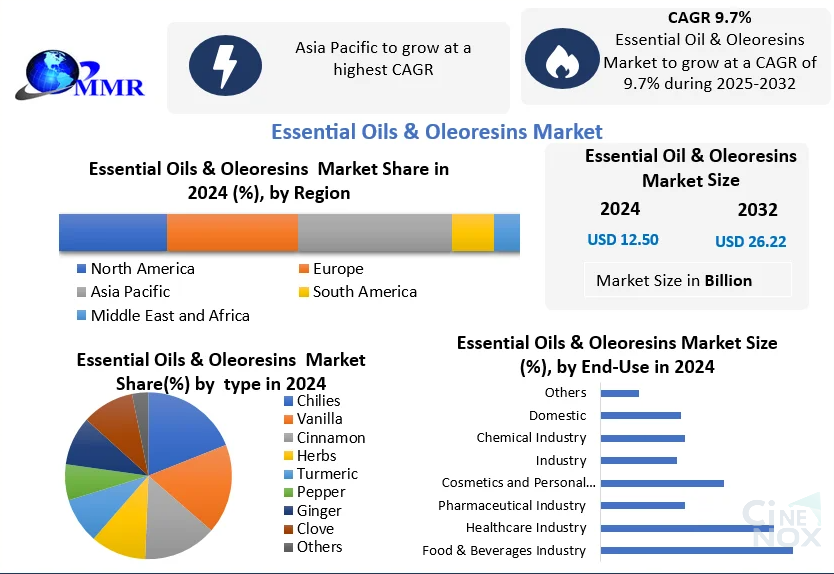
  • The Global Essential Oils & Oleoresins Market is witnessing strong and sustained growth, driven by increasing consumer preference for natural, clean-label, and plant-based ingredients across food, beverages, cosmetics, pharmaceuticals, and wellness industries. Valued at USD 12.50 Billion in 2024, the market is projected to grow at a CAGR of 9.7% from 2025 to 2032, reaching nearly USD 26.22 Billion by 2032. This growth trajectory reflects a structural shift toward natural flavorings, fragrances, and therapeutic compounds, supported by rising health awareness, evolving lifestyle patterns, and technological advancements in extraction processes.

    Get a Free Sample PDF Of This Report (Get Higher Priority for Corporate Email ID):- https://www.maximizemarketresearch.com/request-sample/101054/

    Market Overview
    Essential oils are highly concentrated plant extracts obtained through methods such as steam distillation or cold pressing, capturing the natural aroma and bioactive properties of plants. Oleoresins, on the other hand, are solvent-extracted natural products that contain both volatile essential oils and non-volatile resinous components, offering intense flavor, aroma, and functional benefits. Together, essential oils and oleoresins play a critical role as natural alternatives to synthetic additives in multiple end-use industries.

    Get a Free Sample PDF Of This Report (Get Higher Priority for Corporate Email ID):- https://www.maximizemarketresearch.com/request-sample/101054/

    Key Market Trends

    Health and Wellness

    Ethnic and Global Cuisines

    Convenience Packaging

    Sustainability

    Key Market Segments
    By Product Type, chilies dominate the market, accounting for approximately 32% of total revenue, driven by extensive use in food processing, seasoning blends, and pharmaceuticals.

    By Source, lavender and bergamot collectively represent nearly 23% of total extraction, primarily used in aromatherapy, cosmetics, and personal care products.

    By End User, the food and beverages industry remains the largest consumer, followed by cosmetics and personal care, pharmaceuticals, healthcare, and chemical industries.

    Get a Free Sample PDF Of This Report (Get Higher Priority for Corporate Email ID):- https://www.maximizemarketresearch.com/request-sample/101054/

    Regional Outlook
    The Asia-Pacific region led the global essential oils and oleoresins market in 2024 and is expected to maintain dominance throughout the forecast period. Rapid population growth, strong domestic consumption, preference for aromatic and spicy foods, and the presence of large-scale food processing industries have positioned the region as a global leader. India and China, in particular, benefit from abundant raw material availability, skilled labor, and established export networks.

    North America and Europe represent mature but steadily growing markets, driven by premium personal care products, organic food consumption, and wellness-focused lifestyles. Stringent quality standards and demand for certified organic ingredients continue to support innovation and value-added product development in these regions.

    Leading Brands and Products
    The competitive landscape is shaped by both global and regional players with strong technological capabilities and diversified product portfolios. Key companies include Kancor Ingredients Ltd., Synthite Industries Ltd., and Plant Lipids Pvt. Ltd., all of which have established strong global footprints through advanced extraction technologies, traceable sourcing, and clean-label offerings.

    International players such as doTERRA International LLC, Symrise AG, and Firmenich SA continue to invest in R&D, capacity expansion, and sustainable innovation to meet evolving consumer and industry requirements.

    Connect With Us:

    MAXIMIZE MARKET RESEARCH PVT. LTD.
    2nd Floor, Navale IT park Phase 3,
    Pune Banglore Highway, Narhe
    Pune, Maharashtra 411041, India.
    +91 9607365656
    sales@maximizemarketresearch.com

    About Maximize Market Research:

    Maximize Market Research is one of the fastest-growing market research and business consulting firms serving clients globally. Our revenue impact and focused growth-driven research initiatives make us a proud partner of majority of the Fortune 500 companies. We have a diversified portfolio and serve a variety of industries such as IT & telecom, chemical, food & beverage, aerospace & defense, healthcare and others.
    The Global Essential Oils & Oleoresins Market is witnessing strong and sustained growth, driven by increasing consumer preference for natural, clean-label, and plant-based ingredients across food, beverages, cosmetics, pharmaceuticals, and wellness industries. Valued at USD 12.50 Billion in 2024, the market is projected to grow at a CAGR of 9.7% from 2025 to 2032, reaching nearly USD 26.22 Billion by 2032. This growth trajectory reflects a structural shift toward natural flavorings, fragrances, and therapeutic compounds, supported by rising health awareness, evolving lifestyle patterns, and technological advancements in extraction processes. Get a Free Sample PDF Of This Report (Get Higher Priority for Corporate Email ID):- https://www.maximizemarketresearch.com/request-sample/101054/ Market Overview Essential oils are highly concentrated plant extracts obtained through methods such as steam distillation or cold pressing, capturing the natural aroma and bioactive properties of plants. Oleoresins, on the other hand, are solvent-extracted natural products that contain both volatile essential oils and non-volatile resinous components, offering intense flavor, aroma, and functional benefits. Together, essential oils and oleoresins play a critical role as natural alternatives to synthetic additives in multiple end-use industries. Get a Free Sample PDF Of This Report (Get Higher Priority for Corporate Email ID):- https://www.maximizemarketresearch.com/request-sample/101054/ Key Market Trends Health and Wellness Ethnic and Global Cuisines Convenience Packaging Sustainability Key Market Segments By Product Type, chilies dominate the market, accounting for approximately 32% of total revenue, driven by extensive use in food processing, seasoning blends, and pharmaceuticals. By Source, lavender and bergamot collectively represent nearly 23% of total extraction, primarily used in aromatherapy, cosmetics, and personal care products. By End User, the food and beverages industry remains the largest consumer, followed by cosmetics and personal care, pharmaceuticals, healthcare, and chemical industries. Get a Free Sample PDF Of This Report (Get Higher Priority for Corporate Email ID):- https://www.maximizemarketresearch.com/request-sample/101054/ Regional Outlook The Asia-Pacific region led the global essential oils and oleoresins market in 2024 and is expected to maintain dominance throughout the forecast period. Rapid population growth, strong domestic consumption, preference for aromatic and spicy foods, and the presence of large-scale food processing industries have positioned the region as a global leader. India and China, in particular, benefit from abundant raw material availability, skilled labor, and established export networks. North America and Europe represent mature but steadily growing markets, driven by premium personal care products, organic food consumption, and wellness-focused lifestyles. Stringent quality standards and demand for certified organic ingredients continue to support innovation and value-added product development in these regions. Leading Brands and Products The competitive landscape is shaped by both global and regional players with strong technological capabilities and diversified product portfolios. Key companies include Kancor Ingredients Ltd., Synthite Industries Ltd., and Plant Lipids Pvt. Ltd., all of which have established strong global footprints through advanced extraction technologies, traceable sourcing, and clean-label offerings. International players such as doTERRA International LLC, Symrise AG, and Firmenich SA continue to invest in R&D, capacity expansion, and sustainable innovation to meet evolving consumer and industry requirements. Connect With Us: MAXIMIZE MARKET RESEARCH PVT. LTD. 2nd Floor, Navale IT park Phase 3, Pune Banglore Highway, Narhe Pune, Maharashtra 411041, India. +91 9607365656 sales@maximizemarketresearch.com About Maximize Market Research: Maximize Market Research is one of the fastest-growing market research and business consulting firms serving clients globally. Our revenue impact and focused growth-driven research initiatives make us a proud partner of majority of the Fortune 500 companies. We have a diversified portfolio and serve a variety of industries such as IT & telecom, chemical, food & beverage, aerospace & defense, healthcare and others.
    0 Comments 0 Shares 27 Views 0 Reviews
  • Market Overview

    The global Mung Bean Protein Market continues to gain strategic importance within the broader plant-based protein landscape, supported by rising health awareness, evolving dietary preferences, and expanding applications across food, beverage, and nutrition sectors. Valued at US$ 226.6 million in 2022, the market is projected to grow at a compound annual growth rate (CAGR) of 3% over the forecast period, reflecting stable and sustained demand worldwide.

    Intrigued to explore the contents? Secure your hands-on sample copy of the report: https://www.maximizemarketresearch.com/request-sample/145967/

    Mung bean, also known as green gram, is a nutrient-dense legume cultivated extensively across tropical and subtropical regions, particularly in Asia-Pacific. It is naturally rich in high-quality protein, dietary fiber, vitamins, minerals, antioxidants, and phytonutrients. These nutritional attributes have long positioned mung beans as a staple ingredient in traditional diets, especially across South and Southeast Asia. In recent years, however, mung bean protein has transitioned from a traditional food source to a commercially significant ingredient used in modern functional foods, sports nutrition products, and dietary supplements.

    Market Dynamics & Key Drivers

    Endurance Sports Surge
    Convenience & Rapid Absorption
    Clean-Label Trend

    Intrigued to explore the contents? Secure your hands-on sample copy of the report: https://www.maximizemarketresearch.com/request-sample/145967/

    Key Market Segments

    By nature, the mung bean protein market is segmented into organic and natural variants. Natural mung bean protein currently dominates the segment, supported by cost efficiency, wide availability, and strong demand from food processors and supplement manufacturers.

    By product type, the market includes concentrates, isolates, and hydrolyzed proteins. Hydrolyzed mung bean protein is witnessing growing traction due to its superior digestibility and functional benefits. It is widely used in processed foods, savory snacks, seasonings, and nutrition products. Increasing consumption of nutrient-rich and easily digestible foods is expected to support continued growth in this segment over the forecast period.

    By end-use, the market is segmented into food and beverages, sports nutrition, pharmaceuticals, and dietary supplements. Dietary supplements represent the largest share, driven by rising awareness of immune health, digestive wellness, and protein supplementation across all age groups. Mung bean protein is increasingly used in protein powders, immune-support supplements, and weight management products, contributing significantly to overall market growth.

    Intrigued to explore the contents? Secure your hands-on sample copy of the report: https://www.maximizemarketresearch.com/request-sample/145967/

    Regional Outlook

    The Asia-Pacific region dominates the global mung bean protein market, supported by favorable climatic conditions, large-scale cultivation, and long-standing dietary integration of mung beans. Countries such as India, China, and Southeast Asian nations benefit from established supply chains and high domestic consumption, reinforcing regional leadership.

    North America represents a key growth market, driven by strong demand for plant-based proteins, sports nutrition products, and vegan food alternatives. Rising health awareness, fitness culture, and clean-label consumption trends are contributing to increased adoption of mung bean protein across the United States and Canada.

    Prominent Industry Players

    Key companies operating in the global mung bean protein market include FUJI Plant Protein Labs, Henry Broch Foods, Equinom, Organicway Inc., Prinova Group LLC, ET-chem Natural Ingredients, 3B Keto, Bulk Powders, ETprotein, Laybio, Plantvita, Proeon, Altein Ingredients Pvt. Ltd., and Laybionatural. These players are focusing on product innovation, capacity expansion, and strategic partnerships to strengthen their global footprint.

    Connect With Us:

    MAXIMIZE MARKET RESEARCH PVT. LTD.
    2nd Floor, Navale IT park Phase 3,
    Pune Banglore Highway, Narhe
    Pune, Maharashtra 411041, India.
    +91 9607365656
    sales@maximizemarketresearch.com

    About Maximize Market Research:

    Maximize Market Research is one of the fastest-growing market research and business consulting firms serving clients globally. Our revenue impact and focused growth-driven research initiatives make us a proud partner of majority of the Fortune 500 companies. We have a diversified portfolio and serve a variety of industries such as IT & telecom, chemical, food & beverage, aerospace & defense, healthcare and others.
    Market Overview The global Mung Bean Protein Market continues to gain strategic importance within the broader plant-based protein landscape, supported by rising health awareness, evolving dietary preferences, and expanding applications across food, beverage, and nutrition sectors. Valued at US$ 226.6 million in 2022, the market is projected to grow at a compound annual growth rate (CAGR) of 3% over the forecast period, reflecting stable and sustained demand worldwide. Intrigued to explore the contents? Secure your hands-on sample copy of the report: https://www.maximizemarketresearch.com/request-sample/145967/ Mung bean, also known as green gram, is a nutrient-dense legume cultivated extensively across tropical and subtropical regions, particularly in Asia-Pacific. It is naturally rich in high-quality protein, dietary fiber, vitamins, minerals, antioxidants, and phytonutrients. These nutritional attributes have long positioned mung beans as a staple ingredient in traditional diets, especially across South and Southeast Asia. In recent years, however, mung bean protein has transitioned from a traditional food source to a commercially significant ingredient used in modern functional foods, sports nutrition products, and dietary supplements. Market Dynamics & Key Drivers Endurance Sports Surge Convenience & Rapid Absorption Clean-Label Trend Intrigued to explore the contents? Secure your hands-on sample copy of the report: https://www.maximizemarketresearch.com/request-sample/145967/ Key Market Segments By nature, the mung bean protein market is segmented into organic and natural variants. Natural mung bean protein currently dominates the segment, supported by cost efficiency, wide availability, and strong demand from food processors and supplement manufacturers. By product type, the market includes concentrates, isolates, and hydrolyzed proteins. Hydrolyzed mung bean protein is witnessing growing traction due to its superior digestibility and functional benefits. It is widely used in processed foods, savory snacks, seasonings, and nutrition products. Increasing consumption of nutrient-rich and easily digestible foods is expected to support continued growth in this segment over the forecast period. By end-use, the market is segmented into food and beverages, sports nutrition, pharmaceuticals, and dietary supplements. Dietary supplements represent the largest share, driven by rising awareness of immune health, digestive wellness, and protein supplementation across all age groups. Mung bean protein is increasingly used in protein powders, immune-support supplements, and weight management products, contributing significantly to overall market growth. Intrigued to explore the contents? Secure your hands-on sample copy of the report: https://www.maximizemarketresearch.com/request-sample/145967/ Regional Outlook The Asia-Pacific region dominates the global mung bean protein market, supported by favorable climatic conditions, large-scale cultivation, and long-standing dietary integration of mung beans. Countries such as India, China, and Southeast Asian nations benefit from established supply chains and high domestic consumption, reinforcing regional leadership. North America represents a key growth market, driven by strong demand for plant-based proteins, sports nutrition products, and vegan food alternatives. Rising health awareness, fitness culture, and clean-label consumption trends are contributing to increased adoption of mung bean protein across the United States and Canada. Prominent Industry Players Key companies operating in the global mung bean protein market include FUJI Plant Protein Labs, Henry Broch Foods, Equinom, Organicway Inc., Prinova Group LLC, ET-chem Natural Ingredients, 3B Keto, Bulk Powders, ETprotein, Laybio, Plantvita, Proeon, Altein Ingredients Pvt. Ltd., and Laybionatural. These players are focusing on product innovation, capacity expansion, and strategic partnerships to strengthen their global footprint. Connect With Us: MAXIMIZE MARKET RESEARCH PVT. LTD. 2nd Floor, Navale IT park Phase 3, Pune Banglore Highway, Narhe Pune, Maharashtra 411041, India. +91 9607365656 sales@maximizemarketresearch.com About Maximize Market Research: Maximize Market Research is one of the fastest-growing market research and business consulting firms serving clients globally. Our revenue impact and focused growth-driven research initiatives make us a proud partner of majority of the Fortune 500 companies. We have a diversified portfolio and serve a variety of industries such as IT & telecom, chemical, food & beverage, aerospace & defense, healthcare and others.
    0 Comments 0 Shares 9 Views 0 Reviews
  • The global Alfalfa Concentrate Market is witnessing sustained momentum as demand intensifies across animal nutrition, pharmaceuticals, food, and cosmetics industries. Valued at USD 223.15 million in 2024, the market is projected to expand at a compound annual growth rate (CAGR) of 4.8% from 2025 to 2032, reaching approximately USD 324.71 million by 2032. This growth reflects rising awareness of plant-based nutrition, clean-label ingredients, and functional feed solutions for both humans and animals.

    Intrigued to explore the contents? Secure your hands-on sample copy of the report: https://www.maximizemarketresearch.com/request-sample/101891/

    Market Overview
    Alfalfa, traditionally cultivated as a high-quality forage crop, has evolved into a valuable raw material for diversified industrial applications. Rich in proteins, vitamins, minerals, carotenoids, amino acids, and bioactive compounds, alfalfa has earned recognition not only as an animal feed staple but also as a functional ingredient in human nutrition, pharmaceuticals, and cosmetics.

    Intrigued to explore the contents? Secure your hands-on sample copy of the report: https://www.maximizemarketresearch.com/request-sample/101891/

    Market Dynamics & Key Drivers

    Endurance Nutrition & Performance-Led Demand

    Convenience & Rapid Absorption

    Clean-Label and Plant-Based Trend

    Key Market Segments
    By Form:
    Powdered alfalfa concentrate dominates the market due to its versatility, stability, and ease of incorporation into animal feed and industrial formulations. Capsules, pills, and liquid forms are gaining traction in pharmaceuticals and dietary supplements, catering to targeted health applications.

    By End User:
    The animal husbandry and pet food industries collectively account for over one-third of total consumption, driven by rising livestock health concerns and increased pet ownership. The dairy and poultry sectors represent another significant share, utilizing alfalfa concentrate to enhance productivity and nutritional quality. Pharmaceuticals and food industries are emerging as high-growth segments, supported by demand for plant-based, functional ingredients.

    By Distribution Channel:
    Specialty stores remain a key sales channel, particularly for animal nutrition products. However, e-commerce platforms are experiencing rapid growth, registering a substantial increase in customer adoption due to convenience, wider product availability, and competitive pricing. Pharmacies, supermarkets, and convenience stores also play an important role, especially for supplements and food-grade products.

    Intrigued to explore the contents? Secure your hands-on sample copy of the report: https://www.maximizemarketresearch.com/request-sample/101891/

    Regional Outlook

    The Asia-Pacific region is emerging as a high-growth market, driven by rising expenditure on animal nutrition, expanding dairy and poultry industries, and increasing awareness of plant-based supplements. Europe shows steady growth, particularly in cosmetics and personal care, where alfalfa-derived ingredients are gaining popularity in organic and premium product lines. The Middle East and Africa region currently exhibits moderate growth due to economic and political constraints but holds long-term potential as agricultural practices modernize.

    Prominent Industry Players
    The global alfalfa concentrate market is moderately fragmented, with established players and emerging manufacturers competing on product quality, sourcing, and innovation. Key companies operating in the market include Bioriginal Food & Science Corporation, Swanson Vitamins, Sun Prime, Nature LLC, Martin Bauer Group, LiquaDry, Nutrilite, Refine Biology, Acetar Bio-Tech, JIAHERB Inc., Desialies, Xi’an Tianrui Biotech Co. Ltd., Xi’an Tianyi Pvt. Ltd., Hunan Nutramax Inc., Nanjing Zhi Bai Cui Biology Technology, and 3W Botanical Extract. These players are focusing on capacity expansion, sustainable sourcing, and application-specific product development to strengthen their market position.

    Connect With Us:

    MAXIMIZE MARKET RESEARCH PVT. LTD.
    2nd Floor, Navale IT park Phase 3,
    Pune Banglore Highway, Narhe
    Pune, Maharashtra 411041, India.
    +91 9607365656
    sales@maximizemarketresearch.com

    About Maximize Market Research:

    Maximize Market Research is one of the fastest-growing market research and business consulting firms serving clients globally. Our revenue impact and focused growth-driven research initiatives make us a proud partner of majority of the Fortune 500 companies. We have a diversified portfolio and serve a variety of industries such as IT & telecom, chemical, food & beverage, aerospace & defense, healthcare and others.


    The global Alfalfa Concentrate Market is witnessing sustained momentum as demand intensifies across animal nutrition, pharmaceuticals, food, and cosmetics industries. Valued at USD 223.15 million in 2024, the market is projected to expand at a compound annual growth rate (CAGR) of 4.8% from 2025 to 2032, reaching approximately USD 324.71 million by 2032. This growth reflects rising awareness of plant-based nutrition, clean-label ingredients, and functional feed solutions for both humans and animals. Intrigued to explore the contents? Secure your hands-on sample copy of the report: https://www.maximizemarketresearch.com/request-sample/101891/ Market Overview Alfalfa, traditionally cultivated as a high-quality forage crop, has evolved into a valuable raw material for diversified industrial applications. Rich in proteins, vitamins, minerals, carotenoids, amino acids, and bioactive compounds, alfalfa has earned recognition not only as an animal feed staple but also as a functional ingredient in human nutrition, pharmaceuticals, and cosmetics. Intrigued to explore the contents? Secure your hands-on sample copy of the report: https://www.maximizemarketresearch.com/request-sample/101891/ Market Dynamics & Key Drivers Endurance Nutrition & Performance-Led Demand Convenience & Rapid Absorption Clean-Label and Plant-Based Trend Key Market Segments By Form: Powdered alfalfa concentrate dominates the market due to its versatility, stability, and ease of incorporation into animal feed and industrial formulations. Capsules, pills, and liquid forms are gaining traction in pharmaceuticals and dietary supplements, catering to targeted health applications. By End User: The animal husbandry and pet food industries collectively account for over one-third of total consumption, driven by rising livestock health concerns and increased pet ownership. The dairy and poultry sectors represent another significant share, utilizing alfalfa concentrate to enhance productivity and nutritional quality. Pharmaceuticals and food industries are emerging as high-growth segments, supported by demand for plant-based, functional ingredients. By Distribution Channel: Specialty stores remain a key sales channel, particularly for animal nutrition products. However, e-commerce platforms are experiencing rapid growth, registering a substantial increase in customer adoption due to convenience, wider product availability, and competitive pricing. Pharmacies, supermarkets, and convenience stores also play an important role, especially for supplements and food-grade products. Intrigued to explore the contents? Secure your hands-on sample copy of the report: https://www.maximizemarketresearch.com/request-sample/101891/ Regional Outlook The Asia-Pacific region is emerging as a high-growth market, driven by rising expenditure on animal nutrition, expanding dairy and poultry industries, and increasing awareness of plant-based supplements. Europe shows steady growth, particularly in cosmetics and personal care, where alfalfa-derived ingredients are gaining popularity in organic and premium product lines. The Middle East and Africa region currently exhibits moderate growth due to economic and political constraints but holds long-term potential as agricultural practices modernize. Prominent Industry Players The global alfalfa concentrate market is moderately fragmented, with established players and emerging manufacturers competing on product quality, sourcing, and innovation. Key companies operating in the market include Bioriginal Food & Science Corporation, Swanson Vitamins, Sun Prime, Nature LLC, Martin Bauer Group, LiquaDry, Nutrilite, Refine Biology, Acetar Bio-Tech, JIAHERB Inc., Desialies, Xi’an Tianrui Biotech Co. Ltd., Xi’an Tianyi Pvt. Ltd., Hunan Nutramax Inc., Nanjing Zhi Bai Cui Biology Technology, and 3W Botanical Extract. These players are focusing on capacity expansion, sustainable sourcing, and application-specific product development to strengthen their market position. Connect With Us: MAXIMIZE MARKET RESEARCH PVT. LTD. 2nd Floor, Navale IT park Phase 3, Pune Banglore Highway, Narhe Pune, Maharashtra 411041, India. +91 9607365656 sales@maximizemarketresearch.com About Maximize Market Research: Maximize Market Research is one of the fastest-growing market research and business consulting firms serving clients globally. Our revenue impact and focused growth-driven research initiatives make us a proud partner of majority of the Fortune 500 companies. We have a diversified portfolio and serve a variety of industries such as IT & telecom, chemical, food & beverage, aerospace & defense, healthcare and others.
    0 Comments 0 Shares 12 Views 0 Reviews
  • What Is the Future of the Immune Health Ingredient Market? Insights to 2032

    According to a newly published market research report by 24LifeSciences, global immune health ingredient market was valued at USD 23.8 billion in 2023 and is projected to reach USD 45.0 billion by 2032, growing at a compound annual growth rate (CAGR) of 7.5% during the forecast period 2024–2032.

    Immune health ingredients, comprising vitamins, minerals, probiotics, prebiotics, botanical extracts, and specialized proteins, are bioactive compounds scientifically recognized for supporting and modulating the body's natural defense mechanisms. These ingredients are extensively incorporated into dietary supplements, functional foods and beverages, pharmaceuticals, and animal nutrition products. Their proven efficacy in enhancing immune resilience continues to drive their strategic importance across global health and wellness markets.

    Download a Free Sample Report (PDF): https://www.24lifesciences.com/download-sample/12330/immune-health-ingredient-market
    What Is the Future of the Immune Health Ingredient Market? Insights to 2032 According to a newly published market research report by 24LifeSciences, global immune health ingredient market was valued at USD 23.8 billion in 2023 and is projected to reach USD 45.0 billion by 2032, growing at a compound annual growth rate (CAGR) of 7.5% during the forecast period 2024–2032. Immune health ingredients, comprising vitamins, minerals, probiotics, prebiotics, botanical extracts, and specialized proteins, are bioactive compounds scientifically recognized for supporting and modulating the body's natural defense mechanisms. These ingredients are extensively incorporated into dietary supplements, functional foods and beverages, pharmaceuticals, and animal nutrition products. Their proven efficacy in enhancing immune resilience continues to drive their strategic importance across global health and wellness markets. Download a Free Sample Report (PDF): https://www.24lifesciences.com/download-sample/12330/immune-health-ingredient-market
    0 Comments 0 Shares 46 Views 0 Reviews
  • Introduction
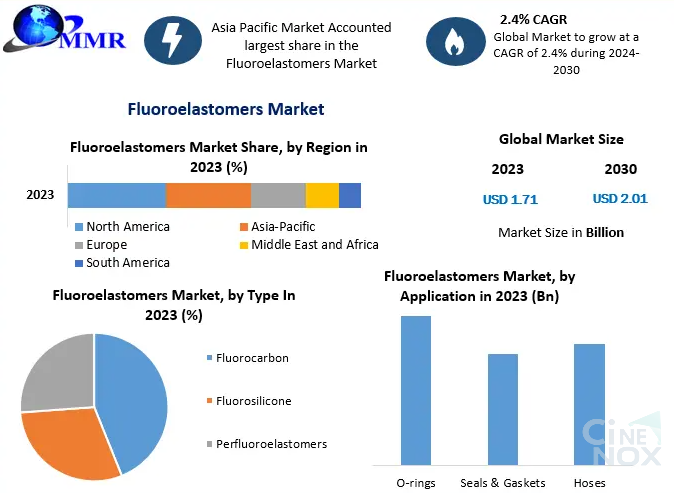
    The global Fluoroelastomers Market continues to demonstrate steady growth momentum, supported by rising demand from high-performance industrial applications and technologically advanced end-use industries. Valued at US$ 1.71 Billion in 2023, the market is projected to reach nearly US$ 2.01 Billion by 2030, expanding at a compound annual growth rate (CAGR) of 2.4% from 2024 to 2030. Fluoroelastomers, commonly referred to as FKM or fluoro-rubber, are specialty elastomers known for their exceptional resistance to heat, chemicals, fuels, and harsh operating environments. These properties make them indispensable across automotive, oil & gas, aerospace, chemicals, pharmaceuticals, and energy & power industries.

    With increasing emphasis on durability, safety, and performance efficiency, fluoroelastomers are gaining prominence as a critical material solution in sealing, gasketing, and fluid-handling systems. Ongoing research and development activities aimed at improving formulation stability and application versatility further strengthen the market outlook.

    Download Sample Pages of Research Overview: https://www.maximizemarketresearch.com/request-sample/316/

    Fluoroelastomers Market Overview
    According to ASTM International standards, fluoroelastomers are classified as a family of fluorocarbon-based elastomeric materials, primarily derived from vinylidene fluoride monomers. Initially developed by DuPont, FKM materials are now manufactured globally by major producers such as 3M, Solvay SA, Daikin Industries, Asahi Glass Company, and Gujarat Fluorochemicals, along with a growing number of Chinese suppliers.

    Market Dynamics and Trends

    Health & Wellness and Performance Drivers

    Segment Dominance and Application Trends

    Production Hubs and Manufacturing Landscape

    Supply Challenges and Cost Constraints

    Download Sample Pages of Research Overview: https://www.maximizemarketresearch.com/request-sample/316/

    Market Segmentation Analysis
    By Type, the market is segmented into fluorocarbon elastomers, fluorosilicone, and perfluoroelastomers. Fluorocarbon elastomers dominate due to their balanced performance and cost-effectiveness.

    By Application, O-rings and seals & gaskets account for the largest share, followed by hoses and other specialized components.

    By End-Use Industry, automotive remains the leading segment, while energy & power is expected to grow at a notable CAGR of 3.4%, driven by applications in photovoltaic manufacturing and power generation equipment.

    Download Sample Pages of Research Overview: https://www.maximizemarketresearch.com/request-sample/316/

    Key Regional Trends
    The Asia Pacific region is expected to dominate the global fluoroelastomers market throughout the forecast period. Rapid industrialization, expanding automotive production, and strong chemical manufacturing bases in China and India are key growth contributors. China alone accounts for a significant share of global manufacturing output, reinforcing regional demand for high-performance elastomers.

    North America and Europe maintain stable demand, supported by aerospace, oil & gas, and pharmaceutical industries. Meanwhile, emerging economies in Latin America and the Middle East & Africa present long-term growth opportunities as industrial infrastructure continues to develop.

    Major Players in the Fluoroelastomers Market
    Key companies operating in the global fluoroelastomers market include:

    The Chemours Company

    Solvay SA

    3M

    Daikin Industries

    Honeywell International Inc.

    Garlock

    Vanguard Products Corp.

    Connect With Us:

    MAXIMIZE MARKET RESEARCH PVT. LTD.
    2nd Floor, Navale IT park Phase 3,
    Pune Banglore Highway, Narhe
    Pune, Maharashtra 411041, India.
    +91 9607365656
    sales@maximizemarketresearch.com

    About Maximize Market Research:

    Maximize Market Research is one of the fastest-growing market research and business consulting firms serving clients globally. Our revenue impact and focused growth-driven research initiatives make us a proud partner of majority of the Fortune 500 companies. We have a diversified portfolio and serve a variety of industries such as IT & telecom, chemical, food & beverage, aerospace & defense, healthcare and others.

    Introduction The global Fluoroelastomers Market continues to demonstrate steady growth momentum, supported by rising demand from high-performance industrial applications and technologically advanced end-use industries. Valued at US$ 1.71 Billion in 2023, the market is projected to reach nearly US$ 2.01 Billion by 2030, expanding at a compound annual growth rate (CAGR) of 2.4% from 2024 to 2030. Fluoroelastomers, commonly referred to as FKM or fluoro-rubber, are specialty elastomers known for their exceptional resistance to heat, chemicals, fuels, and harsh operating environments. These properties make them indispensable across automotive, oil & gas, aerospace, chemicals, pharmaceuticals, and energy & power industries. With increasing emphasis on durability, safety, and performance efficiency, fluoroelastomers are gaining prominence as a critical material solution in sealing, gasketing, and fluid-handling systems. Ongoing research and development activities aimed at improving formulation stability and application versatility further strengthen the market outlook. Download Sample Pages of Research Overview: https://www.maximizemarketresearch.com/request-sample/316/ Fluoroelastomers Market Overview According to ASTM International standards, fluoroelastomers are classified as a family of fluorocarbon-based elastomeric materials, primarily derived from vinylidene fluoride monomers. Initially developed by DuPont, FKM materials are now manufactured globally by major producers such as 3M, Solvay SA, Daikin Industries, Asahi Glass Company, and Gujarat Fluorochemicals, along with a growing number of Chinese suppliers. Market Dynamics and Trends Health & Wellness and Performance Drivers Segment Dominance and Application Trends Production Hubs and Manufacturing Landscape Supply Challenges and Cost Constraints Download Sample Pages of Research Overview: https://www.maximizemarketresearch.com/request-sample/316/ Market Segmentation Analysis By Type, the market is segmented into fluorocarbon elastomers, fluorosilicone, and perfluoroelastomers. Fluorocarbon elastomers dominate due to their balanced performance and cost-effectiveness. By Application, O-rings and seals & gaskets account for the largest share, followed by hoses and other specialized components. By End-Use Industry, automotive remains the leading segment, while energy & power is expected to grow at a notable CAGR of 3.4%, driven by applications in photovoltaic manufacturing and power generation equipment. Download Sample Pages of Research Overview: https://www.maximizemarketresearch.com/request-sample/316/ Key Regional Trends The Asia Pacific region is expected to dominate the global fluoroelastomers market throughout the forecast period. Rapid industrialization, expanding automotive production, and strong chemical manufacturing bases in China and India are key growth contributors. China alone accounts for a significant share of global manufacturing output, reinforcing regional demand for high-performance elastomers. North America and Europe maintain stable demand, supported by aerospace, oil & gas, and pharmaceutical industries. Meanwhile, emerging economies in Latin America and the Middle East & Africa present long-term growth opportunities as industrial infrastructure continues to develop. Major Players in the Fluoroelastomers Market Key companies operating in the global fluoroelastomers market include: The Chemours Company Solvay SA 3M Daikin Industries Honeywell International Inc. Garlock Vanguard Products Corp. Connect With Us: MAXIMIZE MARKET RESEARCH PVT. LTD. 2nd Floor, Navale IT park Phase 3, Pune Banglore Highway, Narhe Pune, Maharashtra 411041, India. +91 9607365656 sales@maximizemarketresearch.com About Maximize Market Research: Maximize Market Research is one of the fastest-growing market research and business consulting firms serving clients globally. Our revenue impact and focused growth-driven research initiatives make us a proud partner of majority of the Fortune 500 companies. We have a diversified portfolio and serve a variety of industries such as IT & telecom, chemical, food & beverage, aerospace & defense, healthcare and others.
    0 Comments 0 Shares 30 Views 0 Reviews
  • The global food and beverage industry is undergoing a fundamental transformation as consumers increasingly prioritize health, transparency, and natural ingredients in their daily diets. Against this backdrop, the Monk Fruit Sweetener Market is emerging as a key segment within the natural sweeteners landscape. Monk fruit sweeteners, derived from the fruit Siraitia grosvenorii, offer intense sweetness without calories, making them an attractive alternative to sugar and artificial sweeteners.

    Download Sample Pages of Research Overview: https://www.maximizemarketresearch.com/request-sample/262033/

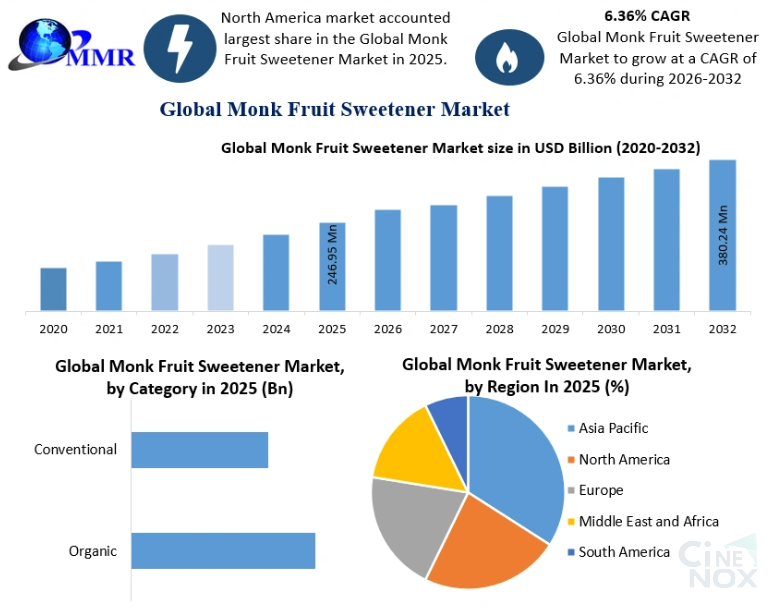
    In 2025, the global Monk Fruit Sweetener Market was valued at USD 246.95 Million. Supported by strong demand from food and beverage manufacturers, growing awareness of the health risks associated with excessive sugar intake, and favorable regulatory developments, the market is projected to grow at a CAGR of 6.36% from 2025 to 2032, reaching nearly USD 380.24 Million by 2032. This steady growth reflects the increasing acceptance of monk fruit sweeteners across both developed and emerging economies.

    Market Overview
    Monk fruit sweeteners are zero-calorie, plant-based sweeteners extracted from monk fruit using processes that isolate mogrosides, the compounds responsible for the fruit’s natural sweetness. Unlike artificial sweeteners, monk fruit sweeteners are perceived as clean-label ingredients, aligning with consumer demand for transparency and simplicity in food formulations.

    Key Growth Drivers
    Growing Awareness of Health Benefits
    Rising Demand for Natural Ingredients
    Expanding Applications Across Industries

    Innovation in blending monk fruit with other natural sweeteners such as erythritol and allulose is also broadening its application range, enabling manufacturers to optimize taste, texture, and cost.

    Download Sample Pages of Research Overview: https://www.maximizemarketresearch.com/request-sample/262033/

    Market Segmentation
    The Monk Fruit Sweetener Market is segmented by form, category, application, and region.

    By form, the market includes powdered and liquid monk fruit sweeteners. Powdered forms held the largest market share in 2025 due to their versatility, longer shelf life, and widespread use in baking and processed foods. Liquid forms are gaining popularity in beverages and tabletop sweeteners.

    By category, the market is divided into organic and conventional monk fruit sweeteners. Organic variants are witnessing faster growth, driven by premiumization trends and increasing consumer willingness to pay for certified organic products.

    By application, key segments include food and beverages, bakery and confectionery, pharmaceuticals, and others, with food and beverages accounting for the dominant share.

    Download Sample Pages of Research Overview: https://www.maximizemarketresearch.com/request-sample/262033/

    Regional Analysis
    North America led the global monk fruit sweetener market in 2025, supported by a mature food and beverage industry, strong consumer awareness, and rapid adoption of sugar-reduction strategies. Major multinational brands, including Coca-Cola and PepsiCo, have incorporated monk fruit sweeteners into select product lines to cater to health-focused consumers.

    Europe is witnessing steady growth, aided by regulatory support for natural sweeteners and increasing demand for clean-label products. Recent regulatory clarity in the UK has further improved market prospects.

    Asia Pacific represents a high-growth region due to rising disposable incomes, urbanization, and a growing middle-class population seeking healthier dietary options. Countries such as China, India, and Japan are playing a crucial role in both production and consumption.

    Major Players
    The competitive landscape is moderately consolidated, with key players focusing on innovation, strategic partnerships, and capacity expansion. Prominent companies operating in the global monk fruit sweetener market include Monk Fruit Corp., Cargill, Tate & Lyle, Archer Daniels Midland Company, and GLG Life Tech Corp.. These companies are investing in R&D to improve extraction efficiency and reduce costs while expanding their global footprint.

    Connect With Us:

    MAXIMIZE MARKET RESEARCH PVT. LTD.
    2nd Floor, Navale IT park Phase 3,
    Pune Banglore Highway, Narhe
    Pune, Maharashtra 411041, India.
    +91 9607365656
    sales@maximizemarketresearch.com

    About Maximize Market Research:

    Maximize Market Research is one of the fastest-growing market research and business consulting firms serving clients globally. Our revenue impact and focused growth-driven research initiatives make us a proud partner of majority of the Fortune 500 companies. We have a diversified portfolio and serve a variety of industries such as IT & telecom, chemical, food & beverage, aerospace & defense, healthcare and others.
    The global food and beverage industry is undergoing a fundamental transformation as consumers increasingly prioritize health, transparency, and natural ingredients in their daily diets. Against this backdrop, the Monk Fruit Sweetener Market is emerging as a key segment within the natural sweeteners landscape. Monk fruit sweeteners, derived from the fruit Siraitia grosvenorii, offer intense sweetness without calories, making them an attractive alternative to sugar and artificial sweeteners. Download Sample Pages of Research Overview: https://www.maximizemarketresearch.com/request-sample/262033/ In 2025, the global Monk Fruit Sweetener Market was valued at USD 246.95 Million. Supported by strong demand from food and beverage manufacturers, growing awareness of the health risks associated with excessive sugar intake, and favorable regulatory developments, the market is projected to grow at a CAGR of 6.36% from 2025 to 2032, reaching nearly USD 380.24 Million by 2032. This steady growth reflects the increasing acceptance of monk fruit sweeteners across both developed and emerging economies. Market Overview Monk fruit sweeteners are zero-calorie, plant-based sweeteners extracted from monk fruit using processes that isolate mogrosides, the compounds responsible for the fruit’s natural sweetness. Unlike artificial sweeteners, monk fruit sweeteners are perceived as clean-label ingredients, aligning with consumer demand for transparency and simplicity in food formulations. Key Growth Drivers Growing Awareness of Health Benefits Rising Demand for Natural Ingredients Expanding Applications Across Industries Innovation in blending monk fruit with other natural sweeteners such as erythritol and allulose is also broadening its application range, enabling manufacturers to optimize taste, texture, and cost. Download Sample Pages of Research Overview: https://www.maximizemarketresearch.com/request-sample/262033/ Market Segmentation The Monk Fruit Sweetener Market is segmented by form, category, application, and region. By form, the market includes powdered and liquid monk fruit sweeteners. Powdered forms held the largest market share in 2025 due to their versatility, longer shelf life, and widespread use in baking and processed foods. Liquid forms are gaining popularity in beverages and tabletop sweeteners. By category, the market is divided into organic and conventional monk fruit sweeteners. Organic variants are witnessing faster growth, driven by premiumization trends and increasing consumer willingness to pay for certified organic products. By application, key segments include food and beverages, bakery and confectionery, pharmaceuticals, and others, with food and beverages accounting for the dominant share. Download Sample Pages of Research Overview: https://www.maximizemarketresearch.com/request-sample/262033/ Regional Analysis North America led the global monk fruit sweetener market in 2025, supported by a mature food and beverage industry, strong consumer awareness, and rapid adoption of sugar-reduction strategies. Major multinational brands, including Coca-Cola and PepsiCo, have incorporated monk fruit sweeteners into select product lines to cater to health-focused consumers. Europe is witnessing steady growth, aided by regulatory support for natural sweeteners and increasing demand for clean-label products. Recent regulatory clarity in the UK has further improved market prospects. Asia Pacific represents a high-growth region due to rising disposable incomes, urbanization, and a growing middle-class population seeking healthier dietary options. Countries such as China, India, and Japan are playing a crucial role in both production and consumption. Major Players The competitive landscape is moderately consolidated, with key players focusing on innovation, strategic partnerships, and capacity expansion. Prominent companies operating in the global monk fruit sweetener market include Monk Fruit Corp., Cargill, Tate & Lyle, Archer Daniels Midland Company, and GLG Life Tech Corp.. These companies are investing in R&D to improve extraction efficiency and reduce costs while expanding their global footprint. Connect With Us: MAXIMIZE MARKET RESEARCH PVT. LTD. 2nd Floor, Navale IT park Phase 3, Pune Banglore Highway, Narhe Pune, Maharashtra 411041, India. +91 9607365656 sales@maximizemarketresearch.com About Maximize Market Research: Maximize Market Research is one of the fastest-growing market research and business consulting firms serving clients globally. Our revenue impact and focused growth-driven research initiatives make us a proud partner of majority of the Fortune 500 companies. We have a diversified portfolio and serve a variety of industries such as IT & telecom, chemical, food & beverage, aerospace & defense, healthcare and others.
    0 Comments 0 Shares 43 Views 0 Reviews
  • Saccharomyces Boulardii Market Size, Growth Drivers, Probiotic Applications & Forecast to 2034 (CAGR 6.1%)
    According to a new report from Intel Market Research, Global Saccharomyces Boulardii market was valued at USD 251 million in 2025 and is projected to reach USD 374 million by 2034, growing at a CAGR of 6.1% during the forecast period (2026-2034). This growth is fueled by increasing consumer awareness of gut health benefits, rising demand for probiotic supplements, and advancements in production technologies like microencapsulation.
    What is Saccharomyces Boulardii?
    Saccharomyces Boulardii is a unique probiotic yeast strain with proven benefits for gastrointestinal health. Unlike bacterial probiotics, this non-pathogenic yeast functions as temporary intestinal flora, offering protection against pathogens while supporting beneficial gut microorganisms. Clinically proven to have anti-diarrheal, anti-inflammatory, and anti-infective properties, it's widely used in healthcare products, pharmaceuticals, and functional foods.
    This comprehensive report delivers deep insights into the global Saccharomyces Boulardii market, covering everything from macro market overviews to micro details including competitive landscapes, development trends, key drivers, challenges, and emerging opportunities.
    The analysis provides valuable perspectives on industry competition and strategic approaches for business growth. Additionally, it offers frameworks for organizational positioning assessments. The competitive landscape section highlights major players' market shares, product positioning, and operational strategies.
    Essentially, this report is essential for industry participants, investors, researchers, consultants, and all stakeholders looking to enter or expand in the Saccharomyces Boulardii market.
    Download Sample Report: Saccharomyces Boulardii Market - View in Detailed Research Report
    Saccharomyces Boulardii Market Size, Growth Drivers, Probiotic Applications & Forecast to 2034 (CAGR 6.1%) According to a new report from Intel Market Research, Global Saccharomyces Boulardii market was valued at USD 251 million in 2025 and is projected to reach USD 374 million by 2034, growing at a CAGR of 6.1% during the forecast period (2026-2034). This growth is fueled by increasing consumer awareness of gut health benefits, rising demand for probiotic supplements, and advancements in production technologies like microencapsulation. What is Saccharomyces Boulardii? Saccharomyces Boulardii is a unique probiotic yeast strain with proven benefits for gastrointestinal health. Unlike bacterial probiotics, this non-pathogenic yeast functions as temporary intestinal flora, offering protection against pathogens while supporting beneficial gut microorganisms. Clinically proven to have anti-diarrheal, anti-inflammatory, and anti-infective properties, it's widely used in healthcare products, pharmaceuticals, and functional foods. This comprehensive report delivers deep insights into the global Saccharomyces Boulardii market, covering everything from macro market overviews to micro details including competitive landscapes, development trends, key drivers, challenges, and emerging opportunities. The analysis provides valuable perspectives on industry competition and strategic approaches for business growth. Additionally, it offers frameworks for organizational positioning assessments. The competitive landscape section highlights major players' market shares, product positioning, and operational strategies. Essentially, this report is essential for industry participants, investors, researchers, consultants, and all stakeholders looking to enter or expand in the Saccharomyces Boulardii market. 📥 Download Sample Report: Saccharomyces Boulardii Market - View in Detailed Research Report
    0 Comments 0 Shares 73 Views 0 Reviews
  • What Is the Future of the Gastrointestinal Therapeutics Market? Growth Forecasts

    According to a newly published market research report by 24LifeSciences, global gastrointestinal therapeutics market is valued at USD 35,410 million in 2026 and is projected to reach USD 51,860 million by 2034, growing at a compound annual growth rate (CAGR) of 5.7% during the forecast period.

    Gastrointestinal therapeutics comprise a critical class of pharmaceuticals designed to treat a wide range of disorders affecting the digestive system, from the esophagus to the colon. This includes prevalent conditions such as gastroesophageal reflux disease (GERD), peptic ulcers, and inflammatory bowel disease (IBD). The therapeutic arsenal includes well-established drugs like proton pump inhibitors, biologics, and antacids, commercially available under brands such as Aciphex (rabeprazole) and Prilosec (omeprazole). The sustained efficacy and expanding applications of these treatments continue to underpin their importance in both primary care and specialized gastroenterology practice.

    Download a Free Sample Report (PDF): https://www.24lifesciences.com/download-sample/8881/gastrointestinal-therapeutics-market
    What Is the Future of the Gastrointestinal Therapeutics Market? Growth Forecasts According to a newly published market research report by 24LifeSciences, global gastrointestinal therapeutics market is valued at USD 35,410 million in 2026 and is projected to reach USD 51,860 million by 2034, growing at a compound annual growth rate (CAGR) of 5.7% during the forecast period. Gastrointestinal therapeutics comprise a critical class of pharmaceuticals designed to treat a wide range of disorders affecting the digestive system, from the esophagus to the colon. This includes prevalent conditions such as gastroesophageal reflux disease (GERD), peptic ulcers, and inflammatory bowel disease (IBD). The therapeutic arsenal includes well-established drugs like proton pump inhibitors, biologics, and antacids, commercially available under brands such as Aciphex (rabeprazole) and Prilosec (omeprazole). The sustained efficacy and expanding applications of these treatments continue to underpin their importance in both primary care and specialized gastroenterology practice. Download a Free Sample Report (PDF): https://www.24lifesciences.com/download-sample/8881/gastrointestinal-therapeutics-market
    0 Comments 0 Shares 24 Views 0 Reviews
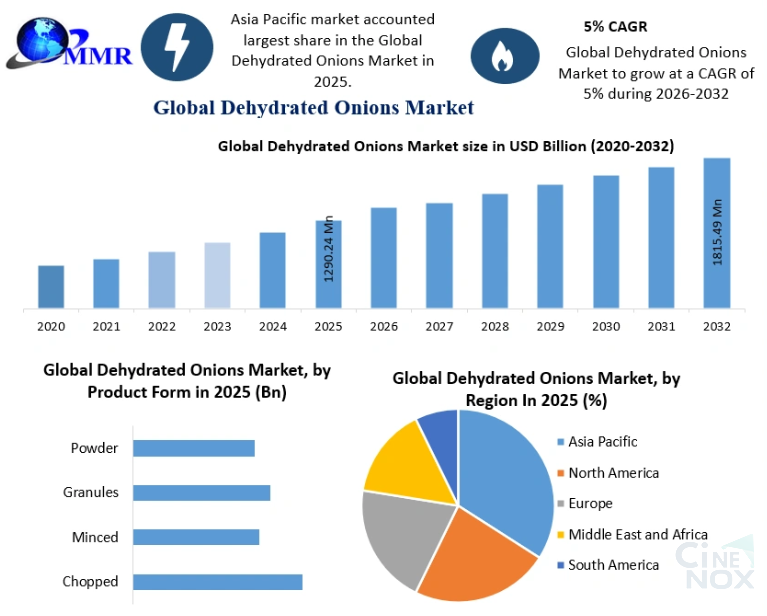
  • The Global Dehydrated Onions Market is witnessing steady expansion, supported by the rising demand for convenient, shelf-stable, and cost-effective food ingredients across multiple end-use industries. In 2025, the market was valued at USD 1,290.24 million, and it is projected to grow at a compound annual growth rate (CAGR) of 5% from 2025 to 2032, reaching approximately USD 1,815.49 million by 2032. This sustained growth reflects the increasing adoption of dehydrated vegetables in food processing, ready-to-cook meals, snacks, and industrial applications worldwide.

    Dehydrated onions are produced by removing moisture from fresh onions using advanced drying technologies such as air drying, freeze drying, and vacuum drying. The resulting product retains flavor, aroma, and nutritional value while offering significantly longer shelf life and ease of transportation. These attributes make dehydrated onions an essential ingredient for manufacturers seeking efficiency, consistency, and reduced wastage in food production.

    Download Sample Pages of Research Overview: https://www.maximizemarketresearch.com/request-sample/24539/

    Market Segmentation Analysis
    The global dehydrated onions market is segmented by product form, onion variety, processing technology, application, and distribution channel.

    By product form, the market includes chopped, minced, granules, and powder. Granules and powder dominate industrial usage due to their ease of blending and consistent flavor delivery in processed foods.

    By onion variety, white onions hold the largest market share and are expected to grow at a CAGR of 5.1% during the forecast period. Their high solid content, low pungency, neutral flavor, and higher dehydration yield make them highly suitable for processed food applications such as soups, sauces, seasoning blends, snacks, and ready-to-eat meals. White onions also offer superior shelf stability and visual appeal compared to red onions, reinforcing their dominance in industrial food production.

    By application, the food and beverage industry accounts for the largest share of global consumption, followed by consumer usage, pharmaceuticals, cosmetics, and other allied sectors. Consumer usage is projected to witness the fastest growth over the forecast period, driven by rising home cooking trends and awareness of dehydrated food benefits.

    Download Sample Pages of Research Overview: https://www.maximizemarketresearch.com/request-sample/24539/

    Regional Insights
    Regionally, Asia Pacific is expected to register the fastest growth during the forecast period and held the largest market share in 2025. Countries such as India and China experience seasonal availability of fresh onions, creating strong opportunities for dehydrated onion producers to meet off-season demand. India, in particular, has emerged as a major exporter, supplying dehydrated onions to Russia, Europe, the United States, and several African countries.

    North America and Europe continue to represent mature markets, supported by high demand from processed food manufacturers and well-established distribution networks. Meanwhile, growth in the Middle East, Africa, and South America is driven by expanding food processing industries and increasing adoption of convenience foods.

    Key Players
    The global dehydrated onions market is moderately fragmented, with the presence of both multinational corporations and regional producers. Key players operating in the market include Olam Group, Van Drunen Farms, BC Foods Inc., Givaudan, Jain Farm Fresh Foods Ltd., Kings Dehydrated Foods Pvt. Ltd., Daksh Foods Pvt. Ltd., Natural Dehydrated Vegetables Pvt. Ltd., Murtuza Foods Pvt. Ltd., Real Dehydrates Pvt. Ltd., Garon Dehydrates Pvt. Ltd., Vakil Foods, Freeze-Dry Foods GmbH, Qingdao UnisonEco Food Technology Co., Ltd., Mahuva Dehydration Pvt. Ltd., and Nature Exports Co.

    Connect With Us:

    MAXIMIZE MARKET RESEARCH PVT. LTD.
    2nd Floor, Navale IT park Phase 3,
    Pune Banglore Highway, Narhe
    Pune, Maharashtra 411041, India.
    +91 9607365656
    sales@maximizemarketresearch.com

    About Maximize Market Research:

    Maximize Market Research is one of the fastest-growing market research and business consulting firms serving clients globally. Our revenue impact and focused growth-driven research initiatives make us a proud partner of majority of the Fortune 500 companies. We have a diversified portfolio and serve a variety of industries such as IT & telecom, chemical, food & beverage, aerospace & defense, healthcare and others.
    The Global Dehydrated Onions Market is witnessing steady expansion, supported by the rising demand for convenient, shelf-stable, and cost-effective food ingredients across multiple end-use industries. In 2025, the market was valued at USD 1,290.24 million, and it is projected to grow at a compound annual growth rate (CAGR) of 5% from 2025 to 2032, reaching approximately USD 1,815.49 million by 2032. This sustained growth reflects the increasing adoption of dehydrated vegetables in food processing, ready-to-cook meals, snacks, and industrial applications worldwide. Dehydrated onions are produced by removing moisture from fresh onions using advanced drying technologies such as air drying, freeze drying, and vacuum drying. The resulting product retains flavor, aroma, and nutritional value while offering significantly longer shelf life and ease of transportation. These attributes make dehydrated onions an essential ingredient for manufacturers seeking efficiency, consistency, and reduced wastage in food production. Download Sample Pages of Research Overview: https://www.maximizemarketresearch.com/request-sample/24539/ Market Segmentation Analysis The global dehydrated onions market is segmented by product form, onion variety, processing technology, application, and distribution channel. By product form, the market includes chopped, minced, granules, and powder. Granules and powder dominate industrial usage due to their ease of blending and consistent flavor delivery in processed foods. By onion variety, white onions hold the largest market share and are expected to grow at a CAGR of 5.1% during the forecast period. Their high solid content, low pungency, neutral flavor, and higher dehydration yield make them highly suitable for processed food applications such as soups, sauces, seasoning blends, snacks, and ready-to-eat meals. White onions also offer superior shelf stability and visual appeal compared to red onions, reinforcing their dominance in industrial food production. By application, the food and beverage industry accounts for the largest share of global consumption, followed by consumer usage, pharmaceuticals, cosmetics, and other allied sectors. Consumer usage is projected to witness the fastest growth over the forecast period, driven by rising home cooking trends and awareness of dehydrated food benefits. Download Sample Pages of Research Overview: https://www.maximizemarketresearch.com/request-sample/24539/ Regional Insights Regionally, Asia Pacific is expected to register the fastest growth during the forecast period and held the largest market share in 2025. Countries such as India and China experience seasonal availability of fresh onions, creating strong opportunities for dehydrated onion producers to meet off-season demand. India, in particular, has emerged as a major exporter, supplying dehydrated onions to Russia, Europe, the United States, and several African countries. North America and Europe continue to represent mature markets, supported by high demand from processed food manufacturers and well-established distribution networks. Meanwhile, growth in the Middle East, Africa, and South America is driven by expanding food processing industries and increasing adoption of convenience foods. Key Players The global dehydrated onions market is moderately fragmented, with the presence of both multinational corporations and regional producers. Key players operating in the market include Olam Group, Van Drunen Farms, BC Foods Inc., Givaudan, Jain Farm Fresh Foods Ltd., Kings Dehydrated Foods Pvt. Ltd., Daksh Foods Pvt. Ltd., Natural Dehydrated Vegetables Pvt. Ltd., Murtuza Foods Pvt. Ltd., Real Dehydrates Pvt. Ltd., Garon Dehydrates Pvt. Ltd., Vakil Foods, Freeze-Dry Foods GmbH, Qingdao UnisonEco Food Technology Co., Ltd., Mahuva Dehydration Pvt. Ltd., and Nature Exports Co. Connect With Us: MAXIMIZE MARKET RESEARCH PVT. LTD. 2nd Floor, Navale IT park Phase 3, Pune Banglore Highway, Narhe Pune, Maharashtra 411041, India. +91 9607365656 sales@maximizemarketresearch.com About Maximize Market Research: Maximize Market Research is one of the fastest-growing market research and business consulting firms serving clients globally. Our revenue impact and focused growth-driven research initiatives make us a proud partner of majority of the Fortune 500 companies. We have a diversified portfolio and serve a variety of industries such as IT & telecom, chemical, food & beverage, aerospace & defense, healthcare and others.
    0 Comments 0 Shares 34 Views 0 Reviews
  • Global Recombinant Protein Biopharmaceuticals Market Projected to Reach USD 296.91 Billion by 2034, Growing at a CAGR of 9.2%; Key Players and Trends
    According to a new report from Intel Market Research, Global Recombinant Protein Biopharmaceuticals market was valued at USD 162.42 billion in 2024 and is projected to reach USD 296.91 billion by 2034, growing at a robust CAGR of 9.2% during the forecast period (2024-2034). This growth is fueled by increasing prevalence of chronic diseases, advancements in biotechnology, and rising demand for targeted therapies that offer superior efficacy with fewer side effects.
    Download FREE Sample Report: https://www.intelmarketresearch.com/download-free-sample/30563/recombinant-protein-biopharmaceuticals-market
    Global Recombinant Protein Biopharmaceuticals Market Projected to Reach USD 296.91 Billion by 2034, Growing at a CAGR of 9.2%; Key Players and Trends According to a new report from Intel Market Research, Global Recombinant Protein Biopharmaceuticals market was valued at USD 162.42 billion in 2024 and is projected to reach USD 296.91 billion by 2034, growing at a robust CAGR of 9.2% during the forecast period (2024-2034). This growth is fueled by increasing prevalence of chronic diseases, advancements in biotechnology, and rising demand for targeted therapies that offer superior efficacy with fewer side effects. 📥 Download FREE Sample Report: https://www.intelmarketresearch.com/download-free-sample/30563/recombinant-protein-biopharmaceuticals-market
    Download Free Sample : Recombinant Protein Biopharmaceuticals Market
    Free Sample Report Preview: Recombinant Protein Biopharmaceuticals Market Growth Analysis, Dynamics, Key Players and Innovations, Outlook and Forecast 2026-2034
    0 Comments 0 Shares 18 Views 0 Reviews
  • Top Healthcare Innovations Reshaping Oral Solid Dosage Contract Manufacturing

    According to a newly published market research report by 24LifeSciences, global oral solid dosage contract manufacturing market is valued at USD 75.5 billion in 2026 and is projected to reach USD 117.2 billion by 2034, growing at a compound annual growth rate (CAGR) of 6.5% during the forecast period.

    Oral solid dosage (OSD) contract manufacturing involves outsourcing the production of solid-form pharmaceuticals, such as tablets, capsules, powders, and granules, to specialized third-party organizations. This business model allows pharmaceutical companies to leverage external expertise, advanced technologies, and scalable production capacity without major capital investment, which is crucial for managing the complex and regulated process of drug development and commercialization.

    Download a Free Sample Report (PDF): https://www.24lifesciences.com/download-sample/8832/oral-solid-dosage-contract-manufacturing-market
    Top Healthcare Innovations Reshaping Oral Solid Dosage Contract Manufacturing According to a newly published market research report by 24LifeSciences, global oral solid dosage contract manufacturing market is valued at USD 75.5 billion in 2026 and is projected to reach USD 117.2 billion by 2034, growing at a compound annual growth rate (CAGR) of 6.5% during the forecast period. Oral solid dosage (OSD) contract manufacturing involves outsourcing the production of solid-form pharmaceuticals, such as tablets, capsules, powders, and granules, to specialized third-party organizations. This business model allows pharmaceutical companies to leverage external expertise, advanced technologies, and scalable production capacity without major capital investment, which is crucial for managing the complex and regulated process of drug development and commercialization. Download a Free Sample Report (PDF): https://www.24lifesciences.com/download-sample/8832/oral-solid-dosage-contract-manufacturing-market
    0 Comments 0 Shares 60 Views 0 Reviews
  • Rising GI Disorders Driving the Malabsorption Syndrome Market Worldwide

    According to a newly published market research report by 24LifeSciences, global malabsorption syndrome market value is at USD 8.5 billion in 2026 and is projected to reach USD 13.2 billion by 2034, growing at a compound annual growth rate (CAGR) of 5.4% during the forecast period.

    Malabsorption syndrome encompasses a group of disorders where the small intestine is unable to properly absorb sufficient amounts of critical nutrients and fluids from ingested food, leading to deficiencies in macronutrients like proteins, carbohydrates, and fats, as well as vital micronutrients including essential vitamins and minerals. This complex condition, often arising secondary to chronic gastrointestinal diseases, demands a multifaceted therapeutic approach that combines targeted pharmaceuticals with specialized nutritional support, underlining its significant clinical and economic impact on global healthcare systems.

    Download a Free Sample Report (PDF): https://www.24lifesciences.com/download-sample/9520/malabsorption-syndrome-market
    Rising GI Disorders Driving the Malabsorption Syndrome Market Worldwide According to a newly published market research report by 24LifeSciences, global malabsorption syndrome market value is at USD 8.5 billion in 2026 and is projected to reach USD 13.2 billion by 2034, growing at a compound annual growth rate (CAGR) of 5.4% during the forecast period. Malabsorption syndrome encompasses a group of disorders where the small intestine is unable to properly absorb sufficient amounts of critical nutrients and fluids from ingested food, leading to deficiencies in macronutrients like proteins, carbohydrates, and fats, as well as vital micronutrients including essential vitamins and minerals. This complex condition, often arising secondary to chronic gastrointestinal diseases, demands a multifaceted therapeutic approach that combines targeted pharmaceuticals with specialized nutritional support, underlining its significant clinical and economic impact on global healthcare systems. Download a Free Sample Report (PDF): https://www.24lifesciences.com/download-sample/9520/malabsorption-syndrome-market
    0 Comments 0 Shares 64 Views 0 Reviews
  • How Novel Drug Classes Are Redefining the Neuropathic Pain Drugs Market

    According to a newly published market research report by 24LifeSciences, the global neuropathic pain drugs market was valued at USD 6.2 billion in 2024 and is projected to reach USD 8.9 billion by 2031, growing at a compound annual growth rate (CAGR) of 5.3% during the forecast period 2025–2031.

    Neuropathic pain drugs are a class of pharmaceuticals specifically developed to manage pain arising from damage or disease affecting the somatosensory nervous system. This type of pain, which is often chronic and debilitating, can manifest as burning, shooting, or stabbing sensations, and includes conditions like allodynia (pain from non-painful stimuli) and dysesthesia (abnormal unpleasant sensations). These medications include various drug classes such as anticonvulsants, antidepressants (like SNRIs and TCAs), topical agents, and other analgesics, targeting the complex mechanisms behind nerve-related pain.

    Download a Free Sample Report (PDF): https://www.24lifesciences.com/download-sample/8942/neuropathic-pain-drugs-market
    How Novel Drug Classes Are Redefining the Neuropathic Pain Drugs Market According to a newly published market research report by 24LifeSciences, the global neuropathic pain drugs market was valued at USD 6.2 billion in 2024 and is projected to reach USD 8.9 billion by 2031, growing at a compound annual growth rate (CAGR) of 5.3% during the forecast period 2025–2031. Neuropathic pain drugs are a class of pharmaceuticals specifically developed to manage pain arising from damage or disease affecting the somatosensory nervous system. This type of pain, which is often chronic and debilitating, can manifest as burning, shooting, or stabbing sensations, and includes conditions like allodynia (pain from non-painful stimuli) and dysesthesia (abnormal unpleasant sensations). These medications include various drug classes such as anticonvulsants, antidepressants (like SNRIs and TCAs), topical agents, and other analgesics, targeting the complex mechanisms behind nerve-related pain. Download a Free Sample Report (PDF): https://www.24lifesciences.com/download-sample/8942/neuropathic-pain-drugs-market
    0 Comments 0 Shares 39 Views 0 Reviews
  • Global High Purity Industrial Fluorene Market: Enabling Advanced Materials and Pharmaceuticals

    Global High Purity Industrial Fluorene Market centers on a specialized aromatic hydrocarbon that serves as a foundational building block for high-tech applications. With purity levels typically exceeding 99%, this compound is far removed from its technical-grade counterparts, enabling precise chemistry required in sensitive manufacturing processes. Its rigid, planar structure makes it invaluable for creating pharmaceuticals, organic electronic materials, and specialty dyes. With the market projected to grow from USD 225.50 million in 2025 to USD 380.42 million by 2032, demand is being driven by the relentless innovation in drug discovery and the global shift toward advanced display and energy technologies, positioning high-purity fluorene as a critical enabler of modern industry.

    Read Full Report: https://www.24chemicalresearch.com/reports/260412/global-high-purity-industrial-fluorene-market
    Global High Purity Industrial Fluorene Market: Enabling Advanced Materials and Pharmaceuticals Global High Purity Industrial Fluorene Market centers on a specialized aromatic hydrocarbon that serves as a foundational building block for high-tech applications. With purity levels typically exceeding 99%, this compound is far removed from its technical-grade counterparts, enabling precise chemistry required in sensitive manufacturing processes. Its rigid, planar structure makes it invaluable for creating pharmaceuticals, organic electronic materials, and specialty dyes. With the market projected to grow from USD 225.50 million in 2025 to USD 380.42 million by 2032, demand is being driven by the relentless innovation in drug discovery and the global shift toward advanced display and energy technologies, positioning high-purity fluorene as a critical enabler of modern industry. Read Full Report: https://www.24chemicalresearch.com/reports/260412/global-high-purity-industrial-fluorene-market
    0 Comments 0 Shares 210 Views 0 Reviews
  • Global Succinic Acid Market: A Sustainable Platform Chemical on the Rise

    Global Succinic Acid Market is emerging as a cornerstone of the bio-based chemical industry, driven by its versatility and sustainable production pathways. As a dicarboxylic acid, succinic acid serves as a crucial building block for a wide range of derivatives, finding applications in biodegradable plastics, resins, food additives, and pharmaceuticals. The market's evolution is marked by a significant transition from traditional petrochemical-based production to fermentation-based bio-manufacturing, aligning with global carbon reduction goals. With the market projected to grow from USD 75.16 million in 2023 to USD 111.53 million by 2029, succinic acid is poised to play a pivotal role in the green chemistry revolution, offering a renewable alternative to conventional platform chemicals.

    Read Full Report: https://www.24chemicalresearch.com/reports/253484/global-succinic-acid-market-2024-109
    Global Succinic Acid Market: A Sustainable Platform Chemical on the Rise Global Succinic Acid Market is emerging as a cornerstone of the bio-based chemical industry, driven by its versatility and sustainable production pathways. As a dicarboxylic acid, succinic acid serves as a crucial building block for a wide range of derivatives, finding applications in biodegradable plastics, resins, food additives, and pharmaceuticals. The market's evolution is marked by a significant transition from traditional petrochemical-based production to fermentation-based bio-manufacturing, aligning with global carbon reduction goals. With the market projected to grow from USD 75.16 million in 2023 to USD 111.53 million by 2029, succinic acid is poised to play a pivotal role in the green chemistry revolution, offering a renewable alternative to conventional platform chemicals. Read Full Report: https://www.24chemicalresearch.com/reports/253484/global-succinic-acid-market-2024-109
    0 Comments 0 Shares 193 Views 0 Reviews
  • Global n-Propyl Bromide Market Poised for Strong Growth Through 2032

    The global n-Propyl Bromide market is witnessing steady expansion as industries such as degreasing, chemical synthesis, pharmaceuticals, and electronics manufacturing continue to increase demand for high-purity solvent chemicals. According to Market Intelo’s latest analysis, the market reached USD 455 million in 2024 and is projected to grow at a CAGR of 4.8% from 2024 to 2032, ultimately reaching USD 665 million by 2032. This growth reflects rising industrial applications and the shift toward environmentally safer solvent alternatives.

    Read More -> https://marketintelo.com/report/n-propyl-bromide-market
    Global n-Propyl Bromide Market Poised for Strong Growth Through 2032 The global n-Propyl Bromide market is witnessing steady expansion as industries such as degreasing, chemical synthesis, pharmaceuticals, and electronics manufacturing continue to increase demand for high-purity solvent chemicals. According to Market Intelo’s latest analysis, the market reached USD 455 million in 2024 and is projected to grow at a CAGR of 4.8% from 2024 to 2032, ultimately reaching USD 665 million by 2032. This growth reflects rising industrial applications and the shift toward environmentally safer solvent alternatives. Read More -> https://marketintelo.com/report/n-propyl-bromide-market
    MARKETINTELO.COM
    n-Propyl Bromide Market Research Report 2033
    As per our latest market intelligence, the Global n-Propyl Bromide market size was valued at $1.25 billion in 2024, and is forecasted to hit $2.13 billion by 2033, growing at a robust CAGR of 6.1% during the forecast period.
    0 Comments 0 Shares 124 Views 0 Reviews
  • Global Triethylamine Market Poised for Strong Growth Driven by Expanding Chemical and Pharmaceutical Applications

    The global Triethylamine market is witnessing steady growth as industries such as pharmaceuticals, agrochemicals, coatings, and textiles continue to adopt this versatile chemical across multiple applications. According to recent market assessments by Market Intelo, the Triethylamine market—valued at USD 1.38 billion in 2024—is projected to reach USD 2.12 billion by 2032, registering a robust CAGR of 5.6% during the forecast period. The market’s upward trajectory reflects rising demand for catalysts, corrosion inhibitors, and intermediates across diverse industrial segments.

    Read More -> https://marketintelo.com/report/triethylamine-market
    Global Triethylamine Market Poised for Strong Growth Driven by Expanding Chemical and Pharmaceutical Applications The global Triethylamine market is witnessing steady growth as industries such as pharmaceuticals, agrochemicals, coatings, and textiles continue to adopt this versatile chemical across multiple applications. According to recent market assessments by Market Intelo, the Triethylamine market—valued at USD 1.38 billion in 2024—is projected to reach USD 2.12 billion by 2032, registering a robust CAGR of 5.6% during the forecast period. The market’s upward trajectory reflects rising demand for catalysts, corrosion inhibitors, and intermediates across diverse industrial segments. Read More -> https://marketintelo.com/report/triethylamine-market
    MARKETINTELO.COM
    Triethylamine Market Research Report 2033
    As per our latest market intelligence, the Global Triethylamine market size was valued at $1.3 billion in 2024, and is forecasted to hit $2.1 billion by 2033, growing at a robust CAGR of 5.3%.
    0 Comments 0 Shares 180 Views 0 Reviews
  • Industrial Dextrins Market Size 2025-2032: USD 2.14 Billion to USD 2.87 Billion – Maltodextrin & Clean-Label Boom


    Global Industrial Dextrins market reached USD 2.1 billion in 2023 and is projected to grow to USD 2.9 billion by 2032 (CAGR 3.3%). Growth is driven by rising demand in food & beverage, pharmaceuticals, and adhesives, with Asia-Pacific fastest-growing and key players including Cargill, Roquette, and Ingredion.

    Get Full Report Here: https://www.24chemicalresearch.com/reports/288259/global-industrial-dextrins-forecast-market-2025-2032-125
    Industrial Dextrins Market Size 2025-2032: USD 2.14 Billion to USD 2.87 Billion – Maltodextrin & Clean-Label Boom Global Industrial Dextrins market reached USD 2.1 billion in 2023 and is projected to grow to USD 2.9 billion by 2032 (CAGR 3.3%). Growth is driven by rising demand in food & beverage, pharmaceuticals, and adhesives, with Asia-Pacific fastest-growing and key players including Cargill, Roquette, and Ingredion. Get Full Report Here: https://www.24chemicalresearch.com/reports/288259/global-industrial-dextrins-forecast-market-2025-2032-125
    0 Comments 0 Shares 72 Views 0 Reviews
  • Global Piperidine Market Set for Strong Growth Driven by Pharmaceutical and Specialty Chemical Demand

    The global Piperidine market continues to experience steady expansion as demand rises across pharmaceuticals, agrochemicals, and specialty chemical manufacturing. According to recent analysis from Market Intelo, the market was valued at USD 78.4 million in 2024 and is projected to grow at a CAGR of 5.7% from 2025 to 2032, ultimately reaching USD 122.9 million by the end of the forecast period. Its versatile applications and growing relevance in innovation-driven industries are positioning piperidine as a key compound in the fine and renewable chemicals segment.

    Read More -> https://marketintelo.com/report/piperidine-market
    Global Piperidine Market Set for Strong Growth Driven by Pharmaceutical and Specialty Chemical Demand The global Piperidine market continues to experience steady expansion as demand rises across pharmaceuticals, agrochemicals, and specialty chemical manufacturing. According to recent analysis from Market Intelo, the market was valued at USD 78.4 million in 2024 and is projected to grow at a CAGR of 5.7% from 2025 to 2032, ultimately reaching USD 122.9 million by the end of the forecast period. Its versatile applications and growing relevance in innovation-driven industries are positioning piperidine as a key compound in the fine and renewable chemicals segment. Read More -> https://marketintelo.com/report/piperidine-market
    MARKETINTELO.COM
    Piperidine Market Research Report 2033
    As per our latest market intelligence, the Global Piperidine market size was valued at $1.12 billion in 2024, and is forecasted to hit $1.89 billion by 2033, growing at a robust CAGR of 5.8% during the forecast period.
    0 Comments 0 Shares 94 Views 0 Reviews
More Results
Ad