
Sponsored
Curved Autoplay YouTube Video
  • ***** Hearing Aids Market to Reach $12.90B by 2032 Driven by Aging Population & AI Technology
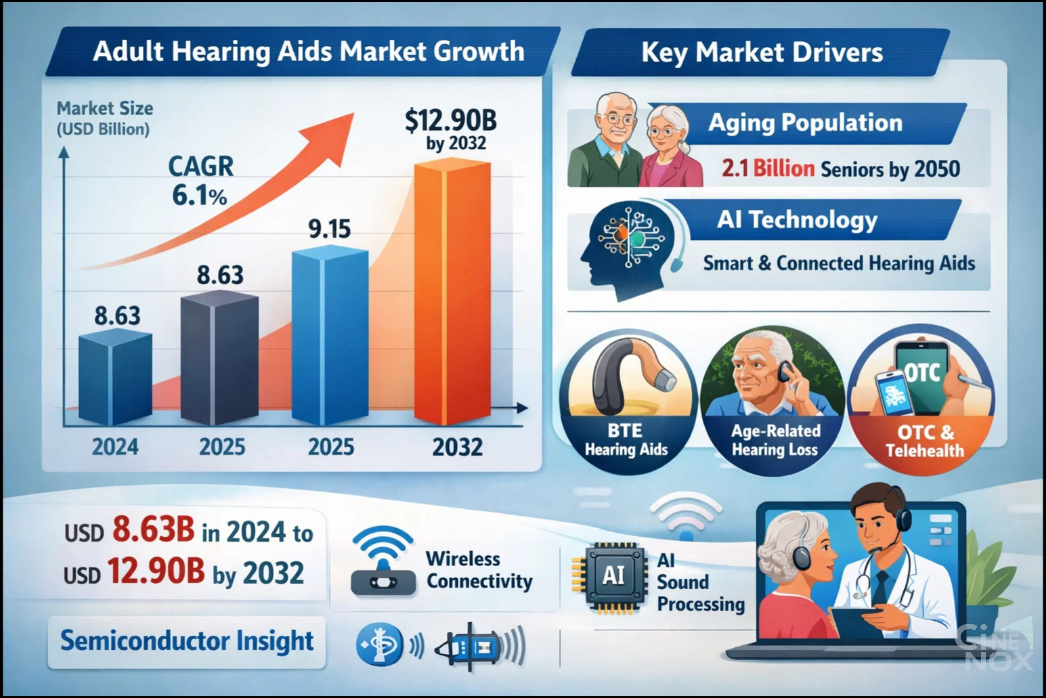
    The global ***** Hearing Aids Market was valued at USD 8.63 billion in 2024 and is projected to grow from USD 9.15 billion in 2025 to USD 12.90 billion by 2032, exhibiting a CAGR of 6.1% during the forecast period. This sustained growth trajectory is detailed in a comprehensive new report published by Semiconductor Insight, which underscores the critical role of these advanced medical devices in addressing the global challenge of hearing impairment, particularly within the aging global demographic.

    Read Full Report: https://semiconductorinsight.com/report/*****-hearing-aids-market/
    Website: https://semiconductorinsight.com/
    International: +91 8087 99 2013
    LinkedIn: Follow Us
    #AdultHearingAidsMarket #HearingAids #HearingLoss #Audiology #MedicalDevices #HealthcareTechnology #DigitalHealth #AIinHealthcare #HearingCare #AssistiveTechnology #AgingPopulation #Presbycusis #HealthTech #WirelessHearingAids #SmartHearingAids #HealthcareInnovation #MarketResearch #IndustryReport #SemiconductorInsight #GlobalMarket #Telehealth #OTCHearingAids #DigitalSignalProcessing #BluetoothTechnology #HealthcareIndustry
    Adult Hearing Aids Market to Reach $12.90B by 2032 Driven by Aging Population & AI Technology The global Adult Hearing Aids Market was valued at USD 8.63 billion in 2024 and is projected to grow from USD 9.15 billion in 2025 to USD 12.90 billion by 2032, exhibiting a CAGR of 6.1% during the forecast period. This sustained growth trajectory is detailed in a comprehensive new report published by Semiconductor Insight, which underscores the critical role of these advanced medical devices in addressing the global challenge of hearing impairment, particularly within the aging global demographic. Read Full Report: https://semiconductorinsight.com/report/adult-hearing-aids-market/ 🌐 Website: https://semiconductorinsight.com/ 📞 International: +91 8087 99 2013 🔗 LinkedIn: Follow Us #AdultHearingAidsMarket #HearingAids #HearingLoss #Audiology #MedicalDevices #HealthcareTechnology #DigitalHealth #AIinHealthcare #HearingCare #AssistiveTechnology #AgingPopulation #Presbycusis #HealthTech #WirelessHearingAids #SmartHearingAids #HealthcareInnovation #MarketResearch #IndustryReport #SemiconductorInsight #GlobalMarket #Telehealth #OTCHearingAids #DigitalSignalProcessing #BluetoothTechnology #HealthcareIndustry
    0 Comments 0 Shares 32 Views 0 Reviews

  • The report by **Semiconductor Insight** highlights a significant transformation in the ***** hearing aid market, projecting it to grow from **$8.63 billion in 2024** to **$12.90 billion by 2032**, with a CAGR of **6.1%**.

    Here is a streamlined summary of the key drivers, technologies, and market shifts identified in the report.

    ---

    ## 1. Primary Market Driver: An Aging Global Population

    The "silver tsunami" is the strongest force behind this growth. As the global population aged 60+ is expected to reach **2.1 billion by 2050**, the prevalence of age-related hearing loss (**presbycusis**) is rising.

    * **Current Impact:** Over 430 million people worldwide require rehabilitation for disabling hearing loss.
    * **Demographic Stats:** Hearing loss affects ~25% of those aged 65–74 and 50% of those aged 75+.

    ## 2. Technological Evolution: Beyond Amplification

    Hearing aids have evolved from simple amplifiers into **intelligent, connected health devices**. Key innovations driving adoption include:

    * **AI & Machine Learning:** Creating personalized soundscapes and real-time environment adaptation.
    * **Connectivity:** Seamless Bluetooth integration with smartphones and entertainment systems.
    * **Miniaturization:** Sleeker designs (like CIC and ITC models) are reducing the social stigma associated with older, bulkier devices.

    ## 3. Market Segmentation

    The market is categorized by device type, technology, and the underlying cause of hearing loss.

    | Category | Key Segments |
    | --- | --- |
    | **Type** | Behind-the-Ear (BTE), In-the-Ear (ITE), In-The-Canal (ITC), Completely-In-Canal (CIC) |
    | **Technology** | Digital Signal Processing (DSP), Bluetooth/Wireless, Rechargeable Systems |
    | **Application** | Age-Related, Congenital, and Acquired Trauma Hearing Loss |

    ## 4. Competitive Landscape

    The industry is dominated by major players focusing on R&D and expansion into high-growth regions like the **Asia-Pacific**. Key companies include:

    * **Leaders:** Sonova, William Demant, Starkey, WS Audiology (Sivantos/Widex), and GN ReSound.
    * **Strategy:** Heavy investment in **telehealth** (remote fitting) and health-tracking features to differentiate products in a crowded market.

    ## 5. Emerging Trends: OTC and Telehealth

    Two major shifts are democratizing access to hearing care:

    * **Over-the-Counter (OTC) Models:** New regulations (especially in the U.S.) allow adults with mild-to-moderate loss to buy devices without a prescription, lowering price barriers.
    * **Telehealth Integration:** Remote adjustments and virtual consultations allow audiologists to reach patients in underserved or rural areas, improving long-term treatment adherence.

    ---

    > **Key Takeaway:** The market is shifting from a purely medical-device model to a "wellness technology" model, driven by AI, consumer-friendly retail options (OTC), and an undeniable demographic need.

    **Would you like me to look up more specific details on the top three competitors mentioned, or perhaps find more information on the latest OTC regulations in a specific region?**
    The report by **Semiconductor Insight** highlights a significant transformation in the adult hearing aid market, projecting it to grow from **$8.63 billion in 2024** to **$12.90 billion by 2032**, with a CAGR of **6.1%**. Here is a streamlined summary of the key drivers, technologies, and market shifts identified in the report. --- ## 1. Primary Market Driver: An Aging Global Population The "silver tsunami" is the strongest force behind this growth. As the global population aged 60+ is expected to reach **2.1 billion by 2050**, the prevalence of age-related hearing loss (**presbycusis**) is rising. * **Current Impact:** Over 430 million people worldwide require rehabilitation for disabling hearing loss. * **Demographic Stats:** Hearing loss affects ~25% of those aged 65–74 and 50% of those aged 75+. ## 2. Technological Evolution: Beyond Amplification Hearing aids have evolved from simple amplifiers into **intelligent, connected health devices**. Key innovations driving adoption include: * **AI & Machine Learning:** Creating personalized soundscapes and real-time environment adaptation. * **Connectivity:** Seamless Bluetooth integration with smartphones and entertainment systems. * **Miniaturization:** Sleeker designs (like CIC and ITC models) are reducing the social stigma associated with older, bulkier devices. ## 3. Market Segmentation The market is categorized by device type, technology, and the underlying cause of hearing loss. | Category | Key Segments | | --- | --- | | **Type** | Behind-the-Ear (BTE), In-the-Ear (ITE), In-The-Canal (ITC), Completely-In-Canal (CIC) | | **Technology** | Digital Signal Processing (DSP), Bluetooth/Wireless, Rechargeable Systems | | **Application** | Age-Related, Congenital, and Acquired Trauma Hearing Loss | ## 4. Competitive Landscape The industry is dominated by major players focusing on R&D and expansion into high-growth regions like the **Asia-Pacific**. Key companies include: * **Leaders:** Sonova, William Demant, Starkey, WS Audiology (Sivantos/Widex), and GN ReSound. * **Strategy:** Heavy investment in **telehealth** (remote fitting) and health-tracking features to differentiate products in a crowded market. ## 5. Emerging Trends: OTC and Telehealth Two major shifts are democratizing access to hearing care: * **Over-the-Counter (OTC) Models:** New regulations (especially in the U.S.) allow adults with mild-to-moderate loss to buy devices without a prescription, lowering price barriers. * **Telehealth Integration:** Remote adjustments and virtual consultations allow audiologists to reach patients in underserved or rural areas, improving long-term treatment adherence. --- > **Key Takeaway:** The market is shifting from a purely medical-device model to a "wellness technology" model, driven by AI, consumer-friendly retail options (OTC), and an undeniable demographic need. **Would you like me to look up more specific details on the top three competitors mentioned, or perhaps find more information on the latest OTC regulations in a specific region?**
    0 Comments 0 Shares 41 Views 0 Reviews
Ad