Sponsored
Curved Autoplay YouTube Video
  • Cotton Blended Fabric Market Valued at USD 42.6 Billion, Projected to Grow at 5.8% CAGR by 2030

    Global cotton blended fabric market demonstrates robust growth potential, with increasing demand across apparel and industrial applications. Valued at USD 42.6 billion in 2023, the market is projected to expand at a CAGR of 5.8% through 2030. This growth trajectory is fueled by the textile industry's shift toward sustainable yet cost-effective materials that combine cotton's natural comfort with synthetic fibers' durability.

    Cotton blends address critical industry needs by enhancing wrinkle resistance, color retention, and longevity compared to 100% cotton fabrics. With fast fashion brands and workwear manufacturers prioritizing performance textiles, polyester-cotton blends dominate with 68% market share, followed by nylon and acrylic variants. The medical sector's growing preference for antimicrobial blended fabrics further propels adoption.

    Get Full Report Here: https://www.24chemicalresearch.com/reports/275604/global-cotton-blended-fabric-market-2024-966

    #chemicalresearch #markets #globalmarket #marketresearch #marketreport #cotton #fabric
    Cotton Blended Fabric Market Valued at USD 42.6 Billion, Projected to Grow at 5.8% CAGR by 2030 Global cotton blended fabric market demonstrates robust growth potential, with increasing demand across apparel and industrial applications. Valued at USD 42.6 billion in 2023, the market is projected to expand at a CAGR of 5.8% through 2030. This growth trajectory is fueled by the textile industry's shift toward sustainable yet cost-effective materials that combine cotton's natural comfort with synthetic fibers' durability. Cotton blends address critical industry needs by enhancing wrinkle resistance, color retention, and longevity compared to 100% cotton fabrics. With fast fashion brands and workwear manufacturers prioritizing performance textiles, polyester-cotton blends dominate with 68% market share, followed by nylon and acrylic variants. The medical sector's growing preference for antimicrobial blended fabrics further propels adoption. Get Full Report Here: https://www.24chemicalresearch.com/reports/275604/global-cotton-blended-fabric-market-2024-966 #chemicalresearch #markets #globalmarket #marketresearch #marketreport #cotton #fabric
    WWW.24CHEMICALRESEARCH.COM
    Global Cotton Blended Fabric Market Research Report 2026(Status and Outlook)
    Cotton Blended Fabric Global Cotton Blended Fabric market was valued at USD million in 2023 and is projected to reach USD million by 2030, at a CAGR of % during the forecast period.
    0 Comments 0 Shares 30 Views 0 Reviews
  • Global Anti-Static Clothing Market Size to Hit USD 2.55 Billion by 2034 at 3.6% CAGR – Top 10 Industry Leaders
    According to a new report from Intel Market Research, Global anti-static clothing market was valued at USD 2.01 billion in 2025 and is projected to reach USD 2.55 billion by 2034, growing at a steady CAGR of 3.6% during the forecast period (2026-2034). This growth is driven by escalating workplace safety regulations across industries and rising ESD protection requirements in electronics manufacturing facilities.

    What is Anti-static Clothing?
    Anti-static clothing comprises specialized garments designed to prevent electrostatic discharge (ESD) through incorporation of conductive fibers like carbon or metal threads. These fabrics safely dissipate static electricity, making them indispensable in electronics manufacturing, pharmaceutical cleanrooms, and hazardous environments where electrostatic discharge could damage sensitive components or trigger explosions. Advanced materials like polyester-cotton blends with integrated conductive pathways now dominate the market, offering both protection and wearer comfort.

    This report provides comprehensive analysis of the global anti-static clothing market covering all critical aspects - from macroeconomic factors to granular segmentation by product type, end-use industry, and regional adoption patterns. The analysis equips stakeholders with actionable intelligence on competitive positioning, technological advancements, and emerging opportunities across the value chain.

    Download Sample Report: Anti-static Clothing Market - View in Detailed Research Report

    Download Sample Report: https://www.intelmarketresearch.com/download-free-sample/35163/anti-static-clothing-market

    Key Market Drivers
    Global Anti-Static Clothing Market Size to Hit USD 2.55 Billion by 2034 at 3.6% CAGR – Top 10 Industry Leaders According to a new report from Intel Market Research, Global anti-static clothing market was valued at USD 2.01 billion in 2025 and is projected to reach USD 2.55 billion by 2034, growing at a steady CAGR of 3.6% during the forecast period (2026-2034). This growth is driven by escalating workplace safety regulations across industries and rising ESD protection requirements in electronics manufacturing facilities. What is Anti-static Clothing? Anti-static clothing comprises specialized garments designed to prevent electrostatic discharge (ESD) through incorporation of conductive fibers like carbon or metal threads. These fabrics safely dissipate static electricity, making them indispensable in electronics manufacturing, pharmaceutical cleanrooms, and hazardous environments where electrostatic discharge could damage sensitive components or trigger explosions. Advanced materials like polyester-cotton blends with integrated conductive pathways now dominate the market, offering both protection and wearer comfort. This report provides comprehensive analysis of the global anti-static clothing market covering all critical aspects - from macroeconomic factors to granular segmentation by product type, end-use industry, and regional adoption patterns. The analysis equips stakeholders with actionable intelligence on competitive positioning, technological advancements, and emerging opportunities across the value chain. 📥 Download Sample Report: Anti-static Clothing Market - View in Detailed Research Report 📥 Download Sample Report: https://www.intelmarketresearch.com/download-free-sample/35163/anti-static-clothing-market Key Market Drivers
    Download Free Sample : Antistatic Clothing Market
    Free Sample Report Preview: Anti-static Clothing Market Growth Analysis, Dynamics, Key Players and Innovations, Outlook and Forecast 2026-2034
    0 Comments 0 Shares 40 Views 0 Reviews
  • Combined Cotton-Filled Dressings Market Forecast to 2032

    According to a newly published market research report by 24LifeSciences, global combined cotton-filled dressings market was valued at USD 346.8 million in 2024 and is projected to grow to USD 482.1 million by 2032, expanding at a compound annual growth rate (CAGR) of 4.2% during the forecast period 2025–2032.

    Combined cotton-filled dressings are advanced wound care products specifically engineered for managing moderate to heavily exuding wounds. These dressings incorporate a highly absorbent coretypically medical-grade cotton often blended with materials like rayon or polyesterenclosed within a soft, non-woven facing. This design efficiently draws and locks away excess exudate while preventing strike-through and maintaining an optimal moist wound healing environment. Sterile and intended for single-use, they serve as a versatile solution for various wound types, including surgical sites, pressure ulcers, and leg ulcers. Their value lies in delivering superior absorbency, sterility, and effective exudate management.

    Download a Free Sample Report (PDF): https://www.24lifesciences.com/download-sample/10692/combined-cotton-filled-dressings-market
    Combined Cotton-Filled Dressings Market Forecast to 2032 According to a newly published market research report by 24LifeSciences, global combined cotton-filled dressings market was valued at USD 346.8 million in 2024 and is projected to grow to USD 482.1 million by 2032, expanding at a compound annual growth rate (CAGR) of 4.2% during the forecast period 2025–2032. Combined cotton-filled dressings are advanced wound care products specifically engineered for managing moderate to heavily exuding wounds. These dressings incorporate a highly absorbent coretypically medical-grade cotton often blended with materials like rayon or polyesterenclosed within a soft, non-woven facing. This design efficiently draws and locks away excess exudate while preventing strike-through and maintaining an optimal moist wound healing environment. Sterile and intended for single-use, they serve as a versatile solution for various wound types, including surgical sites, pressure ulcers, and leg ulcers. Their value lies in delivering superior absorbency, sterility, and effective exudate management. Download a Free Sample Report (PDF): https://www.24lifesciences.com/download-sample/10692/combined-cotton-filled-dressings-market
    0 Comments 0 Shares 28 Views 0 Reviews
  • Butafenacil Market to Grow at a CAGR of 11.6% from 2026 to 2034 – Key Players to Watch
    According to a new report from Intel Market Research, Global Butafenacil market was valued at USD 38.4 million in 2025 and is projected to reach USD 82.6 million by 2034, growing at a strong CAGR of 11.6% during the forecast period (2026–2034). This growth is driven by increasing demand for high-efficiency herbicides in modern agriculture, expansion of crop cultivation areas globally, and the development of advanced weed control solutions.
    What is Butafenacil?
    Butafenacil is a highly effective protoporphyrinogen oxidase (PPO) inhibitor herbicide that disrupts the photosynthesis process in target plants. As a broad-spectrum herbicide, it's particularly effective against challenging broadleaf weeds and grasses. Farmers primarily use Butafenacil for weed control in key crops including cotton, wheat, and orchards, as well as non-crop applications. Its mechanism of action involves causing rapid desiccation of unwanted vegetation while demonstrating favorable environmental profiles compared to some alternative herbicides.
    This comprehensive report offers insightful analysis of the global Butafenacil market, covering all critical aspects from market size and growth patterns to competitive dynamics and future opportunities. The research examines technological developments in herbicide formulations, regulatory landscapes across different regions, and strategic approaches adopted by leading market players.
    The analysis provides valuable perspectives on industry competition and profitability enhancement strategies. It serves as an essential framework for understanding Butafenacil's market position and future potential. The report also thoroughly examines the competitive environment, including market share distribution, key player activities, and emerging competitive threats.
    For agricultural chemical manufacturers, distributors, investors, and agribusiness professionals, this report delivers crucial intelligence for informed decision-making in the evolving Butafenacil market.
    Download Sample Report: https://www.intelmarketresearch.com/download-free-sample/25688/butafenacil-market
    Butafenacil Market to Grow at a CAGR of 11.6% from 2026 to 2034 – Key Players to Watch According to a new report from Intel Market Research, Global Butafenacil market was valued at USD 38.4 million in 2025 and is projected to reach USD 82.6 million by 2034, growing at a strong CAGR of 11.6% during the forecast period (2026–2034). This growth is driven by increasing demand for high-efficiency herbicides in modern agriculture, expansion of crop cultivation areas globally, and the development of advanced weed control solutions. What is Butafenacil? Butafenacil is a highly effective protoporphyrinogen oxidase (PPO) inhibitor herbicide that disrupts the photosynthesis process in target plants. As a broad-spectrum herbicide, it's particularly effective against challenging broadleaf weeds and grasses. Farmers primarily use Butafenacil for weed control in key crops including cotton, wheat, and orchards, as well as non-crop applications. Its mechanism of action involves causing rapid desiccation of unwanted vegetation while demonstrating favorable environmental profiles compared to some alternative herbicides. This comprehensive report offers insightful analysis of the global Butafenacil market, covering all critical aspects from market size and growth patterns to competitive dynamics and future opportunities. The research examines technological developments in herbicide formulations, regulatory landscapes across different regions, and strategic approaches adopted by leading market players. The analysis provides valuable perspectives on industry competition and profitability enhancement strategies. It serves as an essential framework for understanding Butafenacil's market position and future potential. The report also thoroughly examines the competitive environment, including market share distribution, key player activities, and emerging competitive threats. For agricultural chemical manufacturers, distributors, investors, and agribusiness professionals, this report delivers crucial intelligence for informed decision-making in the evolving Butafenacil market. 📥 Download Sample Report: https://www.intelmarketresearch.com/download-free-sample/25688/butafenacil-market
    Download Free Sample : Butafenacil Market
    Free Sample Report Preview: Butafenacil Market Growth Analysis, Dynamics, Key Players and Innovations, Outlook and Forecast 2026-2032
    0 Comments 0 Shares 36 Views 0 Reviews
  • The Global Aviation Jet Fuel & Turbine Fuels Market’s CAGR of 4.9%: Top 10 Companies Leading the Charge by 2034
    According to a new report from Intel Market Research, Global Butafenacil market was valued at USD 38.4 million in 2025 and is projected to reach USD 82.6 million by 2034, growing at a strong CAGR of 11.6% during the forecast period (2026–2034). This growth is driven by increasing demand for high-efficiency herbicides in modern agriculture, expansion of crop cultivation areas globally, and the development of advanced weed control solutions.
    What is Butafenacil?
    Butafenacil is a highly effective protoporphyrinogen oxidase (PPO) inhibitor herbicide that disrupts the photosynthesis process in target plants. As a broad-spectrum herbicide, it's particularly effective against challenging broadleaf weeds and grasses. Farmers primarily use Butafenacil for weed control in key crops including cotton, wheat, and orchards, as well as non-crop applications. Its mechanism of action involves causing rapid desiccation of unwanted vegetation while demonstrating favorable environmental profiles compared to some alternative herbicides.
    This comprehensive report offers insightful analysis of the global Butafenacil market, covering all critical aspects from market size and growth patterns to competitive dynamics and future opportunities. The research examines technological developments in herbicide formulations, regulatory landscapes across different regions, and strategic approaches adopted by leading market players.
    The analysis provides valuable perspectives on industry competition and profitability enhancement strategies. It serves as an essential framework for understanding Butafenacil's market position and future potential. The report also thoroughly examines the competitive environment, including market share distribution, key player activities, and emerging competitive threats.
    For agricultural chemical manufacturers, distributors, investors, and agribusiness professionals, this report delivers crucial intelligence for informed decision-making in the evolving Butafenacil market.
    Download Sample Report: https://www.intelmarketresearch.com/download-free-sample/25688/butafenacil-market

    The Global Aviation Jet Fuel & Turbine Fuels Market’s CAGR of 4.9%: Top 10 Companies Leading the Charge by 2034 According to a new report from Intel Market Research, Global Butafenacil market was valued at USD 38.4 million in 2025 and is projected to reach USD 82.6 million by 2034, growing at a strong CAGR of 11.6% during the forecast period (2026–2034). This growth is driven by increasing demand for high-efficiency herbicides in modern agriculture, expansion of crop cultivation areas globally, and the development of advanced weed control solutions. What is Butafenacil? Butafenacil is a highly effective protoporphyrinogen oxidase (PPO) inhibitor herbicide that disrupts the photosynthesis process in target plants. As a broad-spectrum herbicide, it's particularly effective against challenging broadleaf weeds and grasses. Farmers primarily use Butafenacil for weed control in key crops including cotton, wheat, and orchards, as well as non-crop applications. Its mechanism of action involves causing rapid desiccation of unwanted vegetation while demonstrating favorable environmental profiles compared to some alternative herbicides. This comprehensive report offers insightful analysis of the global Butafenacil market, covering all critical aspects from market size and growth patterns to competitive dynamics and future opportunities. The research examines technological developments in herbicide formulations, regulatory landscapes across different regions, and strategic approaches adopted by leading market players. The analysis provides valuable perspectives on industry competition and profitability enhancement strategies. It serves as an essential framework for understanding Butafenacil's market position and future potential. The report also thoroughly examines the competitive environment, including market share distribution, key player activities, and emerging competitive threats. For agricultural chemical manufacturers, distributors, investors, and agribusiness professionals, this report delivers crucial intelligence for informed decision-making in the evolving Butafenacil market. 📥 Download Sample Report: https://www.intelmarketresearch.com/download-free-sample/25688/butafenacil-market
    Download Free Sample : Butafenacil Market
    Free Sample Report Preview: Butafenacil Market Growth Analysis, Dynamics, Key Players and Innovations, Outlook and Forecast 2026-2032
    0 Comments 0 Shares 38 Views 0 Reviews
  • Introduction
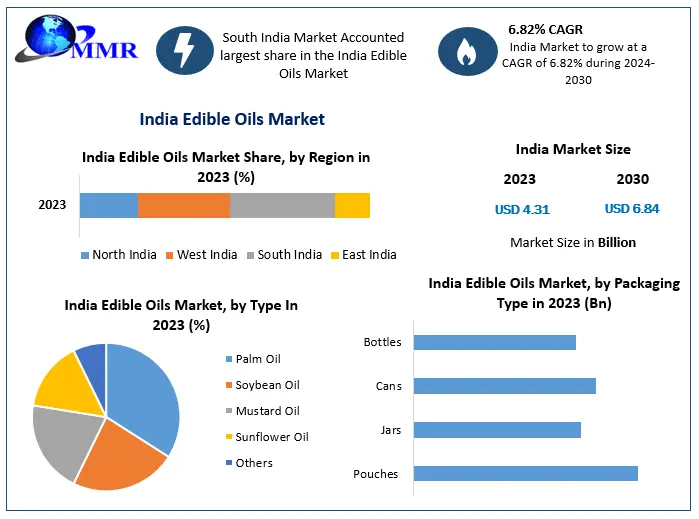
    The India Edible Oils Market is witnessing a transformative phase, driven by changing dietary habits, population growth, rising health awareness, and expanding retail infrastructure. As one of the largest consumers and importers of edible oils globally, India plays a pivotal role in shaping demand patterns across palm oil, soybean oil, mustard oil, sunflower oil, and other specialty oils. According to recent industry assessments, the India Edible Oils Market was valued at US$ 4.31 billion in 2023 and is expected to grow at a compound annual growth rate (CAGR) of 6.82% from 2024 to 2030, reaching nearly US$ 6.84 billion by 2030.

    Download Sample Pages of Research Overview: https://www.maximizemarketresearch.com/request-sample/125654/

    Market Overview
    India is one of the world’s major producers of oilseeds, with crops such as groundnut, sesame, linseed, castor, soybean, sunflower, and coconut forming the backbone of domestic edible oil production. Despite cultivating oilseeds across nearly 25 million hectares and producing around 32 million tons of oilseeds, domestic output meets only slightly over 30% of total edible oil demand, resulting in substantial reliance on imports.

    Market Drivers and Trends
    Health & Wellness Focus
    Health consciousness has emerged as a powerful driver in the India Edible Oils Market. Urban consumers, in particular, are increasingly opting for oils perceived as heart-friendly and nutritionally balanced, such as sunflower oil, soybean oil, and rice bran oil. Oils with low cholesterol claims, balanced fatty acid profiles, and functional health benefits are gaining traction across middle- and upper-income households.

    Download Sample Pages of Research Overview: https://www.maximizemarketresearch.com/request-sample/125654/

    Market Segment Analysis
    By type, palm oil holds the largest share of the India Edible Oils Market due to its affordability and extensive use in household cooking and food processing. Soybean oil and sunflower oil follow, driven by health perceptions and increasing urban demand. Mustard oil maintains strong regional dominance, particularly in northern and eastern India, while other oils such as rice bran and cottonseed oil are gaining niche popularity.

    By packaging type, pouches account for a significant share owing to cost efficiency and convenience, followed by bottles, jars, and cans. By distribution channel, supermarkets and hypermarkets remain dominant, while online channels are registering the fastest growth. Direct and institutional sales continue to support bulk demand.

    Download Sample Pages of Research Overview: https://www.maximizemarketresearch.com/request-sample/125654/

    Regional Analysis
    South India and East India are expected to exhibit the highest growth potential during the forecast period. Southern states show strong consumption of coconut, groundnut, and sunflower oils, while eastern regions maintain high demand for mustard and rapeseed oils. North India remains a key market for vanaspati and blended oils, while western India demonstrates diversified consumption patterns influenced by urbanization and income growth.

    Key Market Players
    The India Edible Oils Market is characterized by the presence of well-established domestic and multinational players focusing on scale, sourcing efficiency, and brand strength. Key companies operating in the market include KSE, Ruchi Soya Industries Ltd, Gokul Agro Resources Ltd, Gujarat Ambuja Exports Ltd, Gokul Refoils and Solvent Ltd, Vijay Solvex Ltd, BCL Industries Ltd, Agro Tech Foods Ltd, Anik Industries Ltd, Kriti Nutrients, Fortune by Adani Group, Sundrop, Dhara, Dalda, and Cargill. Strategic investments, mergers and acquisitions, and product innovation remain central to competitive positioning.
    Connect With Us:

    MAXIMIZE MARKET RESEARCH PVT. LTD.
    2nd Floor, Navale IT park Phase 3,
    Pune Banglore Highway, Narhe
    Pune, Maharashtra 411041, India.
    +91 9607365656
    sales@maximizemarketresearch.com

    About Maximize Market Research:

    Maximize Market Research is one of the fastest-growing market research and business consulting firms serving clients globally. Our revenue impact and focused growth-driven research initiatives make us a proud partner of majority of the Fortune 500 companies. We have a diversified portfolio and serve a variety of industries such as IT & telecom, chemical, food & beverage, aerospace & defense, healthcare and others.
    Introduction The India Edible Oils Market is witnessing a transformative phase, driven by changing dietary habits, population growth, rising health awareness, and expanding retail infrastructure. As one of the largest consumers and importers of edible oils globally, India plays a pivotal role in shaping demand patterns across palm oil, soybean oil, mustard oil, sunflower oil, and other specialty oils. According to recent industry assessments, the India Edible Oils Market was valued at US$ 4.31 billion in 2023 and is expected to grow at a compound annual growth rate (CAGR) of 6.82% from 2024 to 2030, reaching nearly US$ 6.84 billion by 2030. Download Sample Pages of Research Overview: https://www.maximizemarketresearch.com/request-sample/125654/ Market Overview India is one of the world’s major producers of oilseeds, with crops such as groundnut, sesame, linseed, castor, soybean, sunflower, and coconut forming the backbone of domestic edible oil production. Despite cultivating oilseeds across nearly 25 million hectares and producing around 32 million tons of oilseeds, domestic output meets only slightly over 30% of total edible oil demand, resulting in substantial reliance on imports. Market Drivers and Trends Health & Wellness Focus Health consciousness has emerged as a powerful driver in the India Edible Oils Market. Urban consumers, in particular, are increasingly opting for oils perceived as heart-friendly and nutritionally balanced, such as sunflower oil, soybean oil, and rice bran oil. Oils with low cholesterol claims, balanced fatty acid profiles, and functional health benefits are gaining traction across middle- and upper-income households. Download Sample Pages of Research Overview: https://www.maximizemarketresearch.com/request-sample/125654/ Market Segment Analysis By type, palm oil holds the largest share of the India Edible Oils Market due to its affordability and extensive use in household cooking and food processing. Soybean oil and sunflower oil follow, driven by health perceptions and increasing urban demand. Mustard oil maintains strong regional dominance, particularly in northern and eastern India, while other oils such as rice bran and cottonseed oil are gaining niche popularity. By packaging type, pouches account for a significant share owing to cost efficiency and convenience, followed by bottles, jars, and cans. By distribution channel, supermarkets and hypermarkets remain dominant, while online channels are registering the fastest growth. Direct and institutional sales continue to support bulk demand. Download Sample Pages of Research Overview: https://www.maximizemarketresearch.com/request-sample/125654/ Regional Analysis South India and East India are expected to exhibit the highest growth potential during the forecast period. Southern states show strong consumption of coconut, groundnut, and sunflower oils, while eastern regions maintain high demand for mustard and rapeseed oils. North India remains a key market for vanaspati and blended oils, while western India demonstrates diversified consumption patterns influenced by urbanization and income growth. Key Market Players The India Edible Oils Market is characterized by the presence of well-established domestic and multinational players focusing on scale, sourcing efficiency, and brand strength. Key companies operating in the market include KSE, Ruchi Soya Industries Ltd, Gokul Agro Resources Ltd, Gujarat Ambuja Exports Ltd, Gokul Refoils and Solvent Ltd, Vijay Solvex Ltd, BCL Industries Ltd, Agro Tech Foods Ltd, Anik Industries Ltd, Kriti Nutrients, Fortune by Adani Group, Sundrop, Dhara, Dalda, and Cargill. Strategic investments, mergers and acquisitions, and product innovation remain central to competitive positioning. Connect With Us: MAXIMIZE MARKET RESEARCH PVT. LTD. 2nd Floor, Navale IT park Phase 3, Pune Banglore Highway, Narhe Pune, Maharashtra 411041, India. +91 9607365656 sales@maximizemarketresearch.com About Maximize Market Research: Maximize Market Research is one of the fastest-growing market research and business consulting firms serving clients globally. Our revenue impact and focused growth-driven research initiatives make us a proud partner of majority of the Fortune 500 companies. We have a diversified portfolio and serve a variety of industries such as IT & telecom, chemical, food & beverage, aerospace & defense, healthcare and others.

    0 Comments 0 Shares 55 Views 0 Reviews
  • Global Sail Cloth Market: Riding the Recreational Wave to USD 593 Million by 2030

    Sail cloth is a series of textiles that used to manufacture sails. Sails have been made from cloth for all of recorded history. Traditionally sailcloth was made from flax (linen), hemp or cotton in various forms including canvas. However, modern sails are rarely made from natural fibers.

    Read our full Report: : https://www.24chemicalresearch.com/reports/199129/global-sail-cloth-market-2023-2029-71
    Global Sail Cloth Market: Riding the Recreational Wave to USD 593 Million by 2030 Sail cloth is a series of textiles that used to manufacture sails. Sails have been made from cloth for all of recorded history. Traditionally sailcloth was made from flax (linen), hemp or cotton in various forms including canvas. However, modern sails are rarely made from natural fibers. Read our full Report: : https://www.24chemicalresearch.com/reports/199129/global-sail-cloth-market-2023-2029-71
    0 Comments 0 Shares 55 Views 0 Reviews
  • Asia Pacific Nitrocellulose Market Research Report 2024-2030
    The Asia Pacific Nitrocellulose Market size was valued at US$ 678.3 million in 2024 and is projected to reach US$ 842.7 million by 2030, growing at a CAGR of 3.7% during the forecast period. This steady expansion reflects nitrocellulose's critical role across multiple industrial applications, particularly in coatings, inks, and specialty films where its unique properties offer unmatched performance.

    Nitrocellulose, a cellulose nitrate compound, serves as a key ingredient in automotive refinish paints, wood lacquers, and printing inks due to its excellent film-forming characteristics and fast-drying properties. The material's adaptability continues to drive innovation, particularly as manufacturers develop more sustainable formulations to meet evolving environmental regulations and industry demands.

    Download FREE Sample Report: https://www.24chemicalresearch.com/download-sample/280060/asia-pacific-nitrocellulose-market-2024-2030-234

    Market Overview & Regional Analysis
    China dominates the regional landscape, accounting for approximately 40% of Asia Pacific's nitrocellulose consumption. The country's massive coatings industry and expanding packaging sector create sustained demand. India follows with 25% market share, where growth stems from rising automotive production and infrastructure development. Japan maintains a stable 15% share, leveraging its advanced industrial coatings sector.

    Emerging markets like Vietnam and Indonesia show accelerated adoption, particularly in wood furniture coatings and flexible packaging inks. While Southeast Asia currently represents a smaller portion of overall consumption, its 8% annual growth rate outpaces more mature markets. Australia and South Korea maintain specialized demand for high-grade nitrocellulose in premium applications including electronics and advanced coatings.

    Key Market Drivers and Opportunities
    The automotive refinish sector generates 35% of regional demand, driven by Asia's expanding vehicle parc and collision repair market. Wood coatings contribute 30%, supporting the region's thriving furniture export industry. Printing inks account for 25%, with flexible packaging applications showing particular strength amid e-commerce expansion.

    Recent developments include water-based nitrocellulose formulations gaining traction, addressing VOC reduction mandates across multiple countries. The shift toward sustainable production processes presents opportunities, with several manufacturers investing in cleaner nitration technologies. Digital printing's expansion also creates new application potential for specialty nitrocellulose grades in inkjet formulations.

    Challenges & Restraints
    Storage and transportation regulations present ongoing logistical challenges due to nitrocellulose's flammable nature. Raw material price volatility, particularly for cotton linters and wood pulp, continues to pressure manufacturer margins. Regulatory scrutiny has intensified across major markets, with China implementing stricter controls on explosive precursor materials.

    The industry also faces competition from alternative technologies like acrylic resins in coatings and polyurethane systems in wood finishes. However, nitrocellulose maintains advantages in specific applications where its unique combination of properties remains unmatched.

    Market Segmentation by Type

    E-grade Nitrocellulose
    M-grade Nitrocellulose
    A-grade Nitrocellulose
    Others
    Download FREE Sample Report: https://www.24chemicalresearch.com/download-sample/280060/asia-pacific-nitrocellulose-market-2024-2030-234

    Market Segmentation by Application

    Coatings and Paints
    Printing Inks
    Celluloid
    Others
    Market Segmentation and Key Players

    Nantong Celluloid Industrial Co., Ltd.
    Nitrex Chemicals India Ltd.
    Synthesia a.s.
    Nitro Química
    Hubei Xuefei Chemical Co., Ltd.
    Asia Pacific Nitrocellulose Market Research Report 2024-2030 The Asia Pacific Nitrocellulose Market size was valued at US$ 678.3 million in 2024 and is projected to reach US$ 842.7 million by 2030, growing at a CAGR of 3.7% during the forecast period. This steady expansion reflects nitrocellulose's critical role across multiple industrial applications, particularly in coatings, inks, and specialty films where its unique properties offer unmatched performance. Nitrocellulose, a cellulose nitrate compound, serves as a key ingredient in automotive refinish paints, wood lacquers, and printing inks due to its excellent film-forming characteristics and fast-drying properties. The material's adaptability continues to drive innovation, particularly as manufacturers develop more sustainable formulations to meet evolving environmental regulations and industry demands. Download FREE Sample Report: https://www.24chemicalresearch.com/download-sample/280060/asia-pacific-nitrocellulose-market-2024-2030-234 Market Overview & Regional Analysis China dominates the regional landscape, accounting for approximately 40% of Asia Pacific's nitrocellulose consumption. The country's massive coatings industry and expanding packaging sector create sustained demand. India follows with 25% market share, where growth stems from rising automotive production and infrastructure development. Japan maintains a stable 15% share, leveraging its advanced industrial coatings sector. Emerging markets like Vietnam and Indonesia show accelerated adoption, particularly in wood furniture coatings and flexible packaging inks. While Southeast Asia currently represents a smaller portion of overall consumption, its 8% annual growth rate outpaces more mature markets. Australia and South Korea maintain specialized demand for high-grade nitrocellulose in premium applications including electronics and advanced coatings. Key Market Drivers and Opportunities The automotive refinish sector generates 35% of regional demand, driven by Asia's expanding vehicle parc and collision repair market. Wood coatings contribute 30%, supporting the region's thriving furniture export industry. Printing inks account for 25%, with flexible packaging applications showing particular strength amid e-commerce expansion. Recent developments include water-based nitrocellulose formulations gaining traction, addressing VOC reduction mandates across multiple countries. The shift toward sustainable production processes presents opportunities, with several manufacturers investing in cleaner nitration technologies. Digital printing's expansion also creates new application potential for specialty nitrocellulose grades in inkjet formulations. Challenges & Restraints Storage and transportation regulations present ongoing logistical challenges due to nitrocellulose's flammable nature. Raw material price volatility, particularly for cotton linters and wood pulp, continues to pressure manufacturer margins. Regulatory scrutiny has intensified across major markets, with China implementing stricter controls on explosive precursor materials. The industry also faces competition from alternative technologies like acrylic resins in coatings and polyurethane systems in wood finishes. However, nitrocellulose maintains advantages in specific applications where its unique combination of properties remains unmatched. Market Segmentation by Type E-grade Nitrocellulose M-grade Nitrocellulose A-grade Nitrocellulose Others Download FREE Sample Report: https://www.24chemicalresearch.com/download-sample/280060/asia-pacific-nitrocellulose-market-2024-2030-234 Market Segmentation by Application Coatings and Paints Printing Inks Celluloid Others Market Segmentation and Key Players Nantong Celluloid Industrial Co., Ltd. Nitrex Chemicals India Ltd. Synthesia a.s. Nitro Química Hubei Xuefei Chemical Co., Ltd.
    Sample Report: Asia Pacific Nitrocellulose Market Research Report 2024-2030
    Download Sample Report PDF : Asia Pacific Nitrocellulose market was valued at USD 678.3 million in 2024 and is projected to reach USD 842.7 million by 2030, at a CAGR of 3.7%.
    0 Comments 0 Shares 200 Views 0 Reviews
Ad